Τι καλύπτει αυτός ο οδηγός
- Τι κάνουν στην πραγματικότητα οι κατασκευαστές ακινήτων στην Κύπρο
- Η αγορά ανάπτυξης ακινήτων στην Κύπρο το 2026
- Πού χτίζουν οι κατασκευαστές ακινήτων στην Κύπρο
- Πώς να επιλέξετε έναν αξιόπιστο κατασκευαστή ακινήτων στην Κύπρο
- Βίντεο: Πώς διαμορφώνεται η αγορά ακινήτων στην Κύπρο ενόψει του 2026
- Εκτός σχεδίου vs. Έτοιμο: Αγορά από έναν κατασκευαστή ακινήτων στην Κύπρο
- Τι να ελέγξετε πριν υπογράψετε συμβόλαιο με έναν κατασκευαστή ακινήτων στην Κύπρο
- Προκαταβολές Κράτησης, Χρονοδιαγράμματα Πληρωμών και Χρηματοδότηση
- Τα πιο συνηθισμένα λάθη κατά την αγορά από κατασκευαστές ακινήτων στην Κύπρο
- Πώς να χρησιμοποιήσετε το index.cy για να συγκρίνετε κατασκευαστές ακινήτων στην Κύπρο
- Το συμπέρασμα για τους κατασκευαστές ακινήτων στην Κύπρο
Περίπου ένα στα τρία νέα σπίτια που πωλήθηκαν στην Κύπρο το 2025 αγοράστηκε απευθείας από έναν κατασκευαστή ακινήτων και όχι από την αγορά μεταπώλησης. Στις παράκτιες περιοχές το μερίδιο είναι ακόμη υψηλότερο: στη Λεμεσό και την Πάφο, το απόθεμα κατασκευαστών εκτός σχεδίου και ολοκαίνουργιων ακινήτων αντιπροσωπεύει πλέον σχεδόν το 45% όλων των συναλλαγών άνω των 350,000 ευρώ. Αυτό καθιστά το ερώτημα «από ποιον κατασκευαστή αγοράζω;» τουλάχιστον εξίσου σημαντικό με το «ποιο διαμέρισμα αγοράζω;».
Αυτός ο οδηγός του 2026 εξηγεί πώς κατασκευαστές ακινήτων στην Κύπρο στην πραγματικότητα λειτουργεί, ποιος κατασκευάζει τι στις πέντε περιοχές, πώς να ελέγξετε έναν κατασκευαστή πριν πληρώσετε μια προκαταβολή και ποιες προστασίες έχετε όταν αγοράζετε εκτός σχεδίου. Είναι γραμμένο για αγοραστές — Κύπριους, ομογενείς και ξένους — όχι για κατασκευαστές και ακολουθεί την ίδια προσέγγιση που βασίζεται σε δεδομένα που χρησιμοποιούμε σε όλες τις περιοχές. ευρετήριο.cy αγορά, όπου πάνω από 100 επαληθευμένοι προγραμματιστές καταγράφουν τα έργα τους.
Τι κάνουν στην πραγματικότητα οι κατασκευαστές ακινήτων στην Κύπρο
Ένας κατασκευαστής ακινήτων στην Κύπρο είναι μια εταιρεία που αγοράζει γη, εξασφαλίζει άδεια πολεοδομίας, χρηματοδοτεί την κατασκευή και πωλεί τις ολοκληρωμένες μονάδες στους τελικούς αγοραστές. Οι περισσότερες είναι ιδιωτικές κυπριακές εταιρείες. Ένα μικρότερο μερίδιο είναι κοινοπραξίες με ξένους επενδυτές, οικογενειακά γραφεία ή θεσμικά κεφάλαια.
Οι προγραμματιστές στην Κύπρο συνήθως δραστηριοποιούνται σε έναν ή περισσότερους από αυτούς τους τύπους προϊόντων:
- Πολυκατοικίες μεσαίας κατηγορίας — 3–8 όροφοι, 8–60 μονάδες, το κυρίαρχο προϊόν και στις πέντε περιοχές.
- Προαστιακές οικιστικές αναπτύξεις — συστάδες 6–40 ανεξάρτητων ή ημιανεξάρτητων κατοικιών, συνηθισμένες στον Στρόβολο, τη Λακατάμια, την Αραδίππου και τη Γεροσκήπου.
- Επώνυμο ψηλό κτίριο — 15+ όροφοι, συγκεντρωμένοι σχεδόν εξ ολοκλήρου στο κέντρο της Λεμεσού.
- Παράκτιες κατοικίες με βίλες — συνήθως 4–25 βίλες με κοινόχρηστη πισίνα ή πύλη εισόδου, κυρίως στην Πάφο, τον Πρωταρά, το Πισσούρι και την Περνέρα.
- Μικτή χρήση και εμπορική — ξενοδοχεία, διαμερίσματα με υπηρεσίες, γραφεία και καταστήματα λιανικής πώλησης, που συνδυάζονται ολοένα και περισσότερο με επώνυμες κατοικίες.
Η αγορά της Κύπρου είναι κατακερματισμένη. Δεν υπάρχει μία κυρίαρχη εταιρεία ανάπτυξης με διψήφιο μερίδιο αγοράς. Ακόμα και τα πιο γνωστά ονόματα — Pafilia, Cybarco, Aristo Developers, Leptos Estates, Imperio, Quality Group, Cyfield, Korantina Homes, Nice Day Developments — συνήθως βρίσκονται στο εύρος 2-6% της προσφοράς νέων κατασκευών, πράγμα που σημαίνει ότι η ποιότητα και η εκτέλεση ποικίλλουν σημαντικά από το ένα έργο στο άλλο.
Η αγορά ανάπτυξης ακινήτων στην Κύπρο το 2026
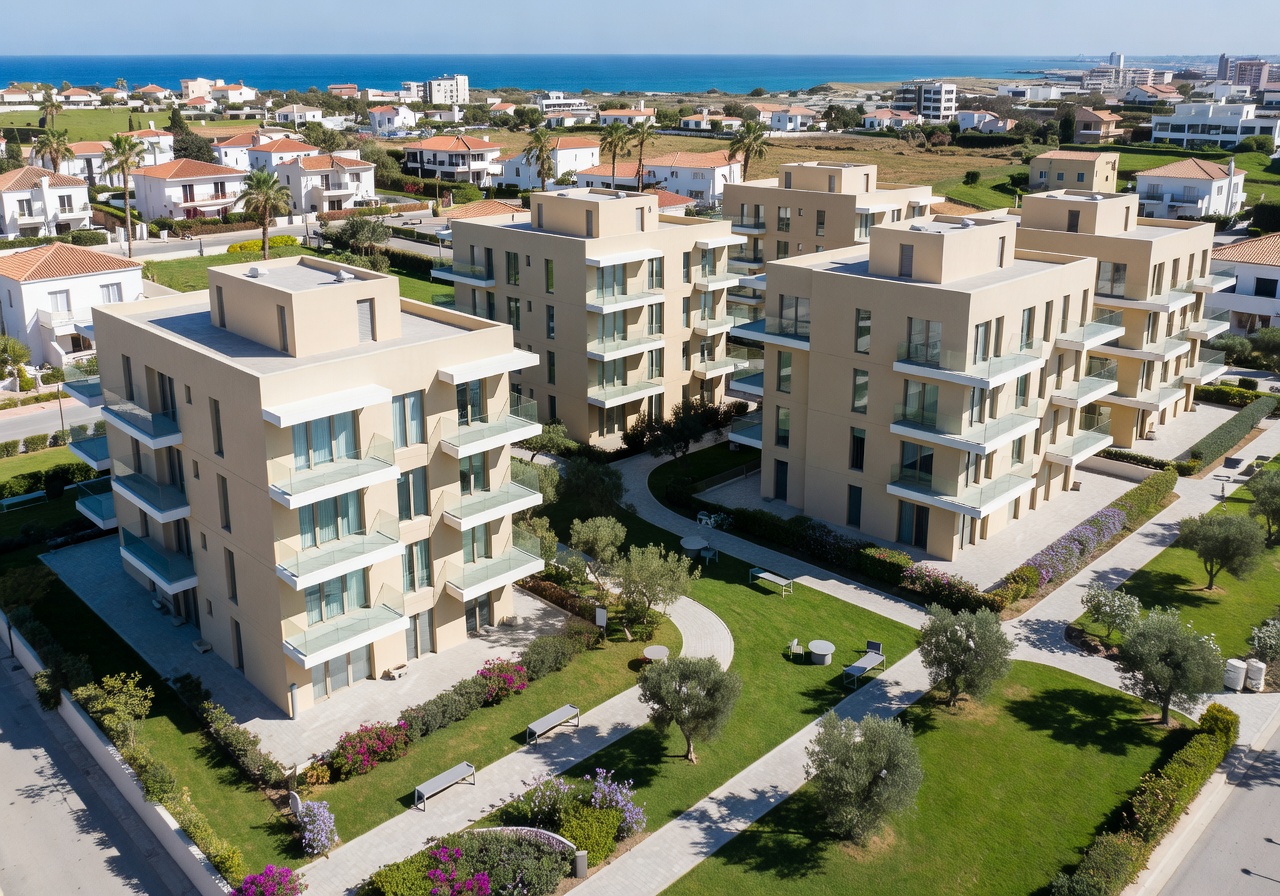
Ο αγωγός είναι πλήρης και ανταγωνιστικός. Τα στοιχεία του Τμήματος Κτηματολογίου και Χωρομετρίας για το 2025 δείχνουν περίπου 12,800 νέες κατοικίες που ολοκληρώθηκαν σε ολόκληρη την περιοχή που ελέγχεται από την κυβέρνηση, ο υψηλότερος αριθμός από το 2009. Περίπου 18,500 άδειες οικοδομής εκδόθηκαν την περίοδο 2024-2025, πράγμα που σημαίνει ότι η ισχυρή προσφορά θα συνεχίσει να φτάνει μέχρι το 2027 και το 2028.
Τρεις τάσεις καθορίζουν την αγορά κατασκευαστών στην Κύπρο το 2026:
- Μεγαλύτερα, ψηλότερα έργα στη Λεμεσό — το σύμπλεγμα μαρινών, οι Limassol Greens, ONE, Trilogy, Del Mar και παρόμοιοι πύργοι έχουν ωθήσει τις τιμές για θέα στη θάλασσα πάνω από τα 10,000 ευρώ/τ.μ. στην κορυφαία βαθμίδα.
- Συμπίεση ποιότητας στην Πάφο και τη Λάρνακα — τα φινιρίσματα, οι ενεργειακές αξιολογήσεις και τα πρότυπα σχεδιασμού έχουν βελτιωθεί σημαντικά, καθώς οι κατασκευαστές ανταγωνίζονται για τους ίδιους προϋπολογισμούς των ομογενών, μειώνοντας το χάσμα με τη Λεμεσό σε βάση ανά τετραγωνικό μέτρο.
- Ταχύτερη πώληση σε μικρότερα έργα — Οι προσιτές τιμές των 8–20 μονάδων στον Στρόβολο, την Αραδίππου και τη Μέσα Γειτονιά εξαντλούνται συνήθως εντός 12 μηνών από την κυκλοφορία τους.
Η ενεργειακή απόδοση έχει γίνει ένα ανταγωνιστικό μέτωπο από μόνο του. Οι περισσότερες αξιόπιστες εγκαινιάσεις στην Κύπρο για το 2026 στοχεύουν σε ενεργειακή κλάση Α, εγκατάσταση φωτοβολταϊκών στην οροφή και προεγκατεστημένο αγωγό για φόρτιση ηλεκτρικών οχημάτων. Οτιδήποτε κάτω από το Β αρχίζει να φαίνεται ξεπερασμένο στους αγοραστές του εξωτερικού.
Πού χτίζουν οι κατασκευαστές ακινήτων στην Κύπρο
Οι κατασκευαστές στην Κύπρο ακολουθούν τη ζήτηση, όχι τη γεωγραφία. Οι πέντε επαρχίες χωρίζονται πολύ διαφορετικά όσον αφορά το προφίλ των αγοραστών, την ανώτατη τιμή και το τι πραγματικά κατασκευάζεται.
| Περιοχή | Τυπικό προϊόν προγραμματιστή (2026) | Εύρος τιμών ζήτησης για νέα κατασκευή | Κύριο προφίλ αγοραστή |
|---|---|---|---|
| Λεμεσός | Μεσαία και πολυώροφα διαμερίσματα, κατοικίες με επωνυμία μαρίνας | €4,500 – €12,000+/τ.μ. | Διεθνή στελέχη, αγοραστές επώνυμων κατοικιών, επενδυτές στο εξωτερικό |
| Πάφος | Παραθαλάσσιες κατοικίες με βίλες, χαμηλά διαμερίσματα, συνταξιοδοτικά προγράμματα | €2,800 – €5,500/τ.μ. | Ομογενείς από το Ηνωμένο Βασίλειο / την Ευρώπη, συνταξιούχοι, αγοραστές δεύτερης κατοικίας |
| Λευκωσία | Προαστιακά σπίτια, πολυκατοικίες μεσαίας κατηγορίας | €2,200 – €4,200/τ.μ. | Κυπριακοί οικογένειες, επαγγελματίες, επενδυτές πανεπιστημιακής ζώνης |
| Λάρνακα | Διαμερίσματα μεσαίας κατηγορίας, παραθαλάσσια βίλες | €2,400 – €4,800/τ.μ. | Εγχώριοι αναβαθμιστές, Ισραηλινοί αγοραστές, Mackenzie / επενδυτές λιμένων |
| Αμμόχωστος | Σχέδια παραθαλάσσιων βιλών, διαμερίσματα δεύτερης κατοικίας | €2,200 – €4,500/τ.μ. | Βρετανοί / Ρώσοι / Ουκρανοί αγοραστές διακοπών, Αγία Νάπα / Πρωταράς |
Για μια βαθύτερη ματιά στο πιο ενεργό αναπτυξιακό σύμπλεγμα της χώρας, το συγκροτήματα και έργα στη Λεμεσό Η σελίδα παραθέτει κάθε ενεργό έργο ανά κατάσταση, μέγεθος και εύρος τιμών. Υπάρχουν αντίστοιχες σελίδες για Πάφος, Λευκωσία, Λάρνακα και Αμμόχωστος.
Μόνο ο αγωγός της Λεμεσού περιλαμβάνει πάνω από 60 ενεργά έργα με επικεφαλής κατασκευαστές. Η Πάφος βρίσκεται περίπου στα 80 αν συμπεριλάβουμε και τα μικρότερα έργα βιλών γύρω από την Πέγεια, την Τάλα, την Κισσόνεργα και τον Κόλπο των Κοραλλιών. Η Λευκωσία είναι το μέρος όπου θα βρείτε τις περισσότερες από τις πιο οικονομικές αναπτύξεις κατοικιών στα προάστια, που απευθύνονται σε τοπικές κυπριακές οικογένειες και όχι σε ομογενείς.
Πώς να επιλέξετε έναν αξιόπιστο κατασκευαστή ακινήτων στην Κύπρο
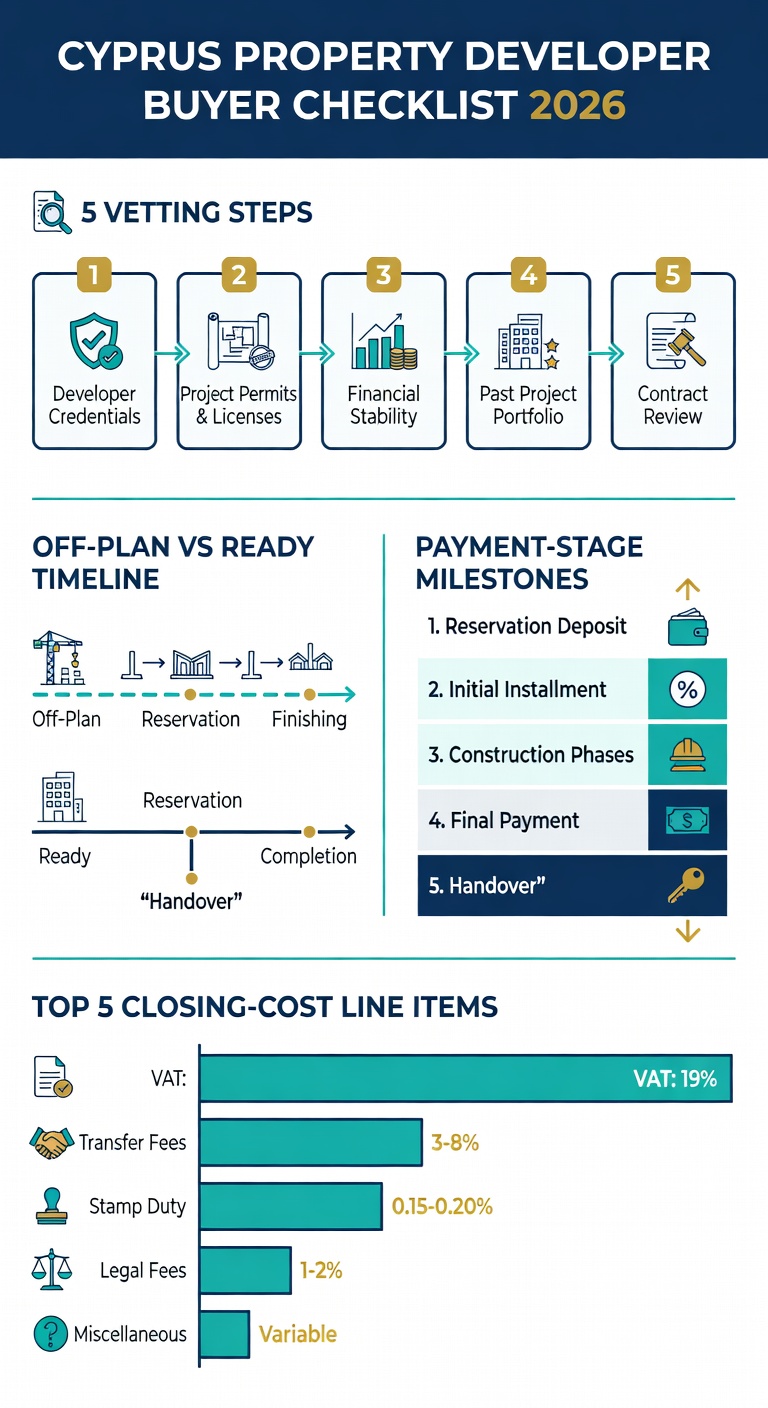
Δεν υπάρχει κεντρική άδεια που να διακρίνει τους «καλούς» κατασκευαστές από τους «κακούς» κατασκευαστές στην Κύπρο. Το νομικό πλαίσιο ρυθμίζει τις συμβάσεις και τις μεταβιβάσεις τίτλων, όχι την ποιότητα των εταιρειών. Συνεπώς, οι αγοραστές πρέπει να διενεργούν πραγματικό έλεγχο δέουσας επιμέλειας. Χρησιμοποιούμε μια λίστα ελέγχου πέντε σημείων για κάθε κατασκευαστή που αναφέρεται στο index.cy.
- Ιστορικό ολοκληρωμένων έργων — ζητήστε τουλάχιστον τρία προηγούμενα έργα ανάπτυξης από την ίδια νομική οντότητα, όχι μόνο από την επωνυμία. Επισκεφθείτε τα αυτοπροσώπως και δείτε τους κοινόχρηστους χώρους, τους ανελκυστήρες και την οροφή, όχι μόνο το διαμέρισμα.
- Ιστορικό παράδοσης τίτλου ιδιοκτησίας — κάθε κατασκευαστής θα πρέπει να είναι σε θέση να σας δείξει, σε χαρτί, πόσο χρόνο έχει χρειαστεί ιστορικά για να εκδώσει ξεχωριστούς τίτλους ιδιοκτησίας σε προηγούμενους αγοραστές. Οι αξιόπιστοι κατασκευαστές στην Κύπρο παραδίδουν τίτλους ιδιοκτησίας εντός 6-24 μηνών από την ολοκλήρωση. Όσο πιο αργά γίνεται αυτό, τόσο πιο έντονο είναι το σημάδι.
- Τραπεζική χρηματοδότηση για το έργο — τα έργα που χρηματοδοτούνται από μια μεγάλη κυπριακή τράπεζα (Τράπεζα Κύπρου, Ελληνική, Eurobank, Alpha) έχουν ήδη υποβληθεί σε εξωτερικό έλεγχο δέουσας επιμέλειας για το οικόπεδο, τις πολεοδομικές άδειες και τη σύμβαση κατασκευής. Ρωτήστε ποια τράπεζα χρηματοδοτεί το έργο και ζητήστε γραπτή επιβεβαίωση.
- Έγγραφο προδιαγραφών — ένας αξιόπιστος κατασκευαστής του 2026 στην Κύπρο εκδίδει τεχνικές προδιαγραφές 10-25 σελίδων (μάρκα κουζίνας, είδη υγιεινής, πάχος υαλοπινάκων, πάχος μόνωσης, φωτοβολταϊκή ισχύς, παροχή ηλεκτρικού οχήματος). Εάν ένας κατασκευαστής δεν μπορεί να σας δείξει μία, φύγετε.
- Πραγματική διεύθυνση και πραγματικοί άνθρωποι — η εταιρεία θα πρέπει να έχει ένα εγγεγραμμένο γραφείο στην Κύπρο που μπορείτε να επισκεφθείτε, διευθυντές που έχουν οριστεί στο μητρώο και διαχειριστές έργων με τους οποίους μπορείτε να μιλήσετε αυτοπροσώπως. Ένας «προγραμματιστής» που υπάρχει μόνο ως ιστότοπος και αριθμός τηλεφώνου σε ξένη χώρα δεν είναι κατασκευαστής ακινήτων στην Κύπρο.
Για μεγαλύτερες αγορές στο εξωτερικό, συνιστούμε πάντα να διασταυρώνετε τις καταχωρίσεις του κατασκευαστή στο μητρώο εταιρειών με τον Έφορο Εταιρειών Κύπρου και να διαβάζετε την λεπτομερή λίστα ελέγχου που υπάρχει στη σελίδα μας. Πλήρης οδηγός για την δέουσα επιμέλεια κατά την αγορά ακινήτου στην Κύπρο.
Βίντεο: Πώς διαμορφώνεται η αγορά ακινήτων στην Κύπρο ενόψει του 2026
Εκτός σχεδίου vs. Έτοιμο: Αγορά από έναν κατασκευαστή ακινήτων στην Κύπρο
Οι περισσότερες συναλλαγές προγραμματιστών στην Κύπρο εμπίπτουν σε μία από τις τρεις χρονικές περιόδους. Κάθε μία έχει διαφορετικό προφίλ κινδύνου και τιμολόγησης.
- Εκτός σχεδίου, προκατασκευασμένο — αγοράζετε από αρχιτεκτονικά σχέδια πριν από την έναρξη των εργασιών. Έκπτωση στην τελική τιμή λιανικής: συνήθως 8–18%. Κίνδυνος: υψηλότερος, καθώς είστε εκτεθειμένοι σε καθυστερήσεις στην κατασκευή και αθέτηση υποχρεώσεων από τον κατασκευαστή.
- Εκτός σχεδίου, υπό κατασκευή — το κτίριο είναι υπό κατασκευή αλλά ημιτελές. Τυπική έκπτωση: 3–10%. Κίνδυνος: μέτριος· ο δομικός κίνδυνος έχει μειωθεί, ο κίνδυνος ολοκλήρωσης παραμένει.
- Καινούργιο, έτοιμο για μετακόμιση — κατασκευασμένο, πιστοποιημένο για χρήση, συχνά επιπλωμένο. Έκπτωση: 0%· πληρώνετε λιανική. Κίνδυνος: ο χαμηλότερος.
Οι εκπτώσεις έχουν σημασία μόνο εάν ολοκληρωθεί το έργο. Το ερώτημα τιμολόγησης που έχει τη μεγαλύτερη σημασία δεν είναι επομένως «πόσο έκπτωση θα υπάρξει στη λιανική πώληση;» αλλά «τι θα συμβεί εάν ο κατασκευαστής χρεοκοπήσει;». Στην Κύπρο, η νομική προστασία για τους αγοραστές εκτός σχεδίου είναι η Νόμος περί πώλησης ακινήτου (Ειδική Απόδοση)., το οποίο σας επιτρέπει να καταχωρίσετε ένα συμβόλαιο πώλησης με σφραγίδα στο Κτηματολόγιο εντός έξι μηνών από την υπογραφή του. Αυτό εμποδίζει τον κατασκευαστή να πουλήσει την ίδια μονάδα δύο φορές ή να την ενεχυριάσει σε τράπεζα χωρίς τη συγκατάθεσή σας.
Η Συγκεκριμένη Απόδοση δεν είναι διαπραγματεύσιμη. Εάν ένας κατασκευαστής ή ο δικηγόρος του προτείνει να την παραλείψετε «για εξοικονόμηση τέλους χαρτοσήμου», αυτό αποτελεί προειδοποιητικό σημάδι που υπερισχύει κάθε άλλου παράγοντα σε αυτόν τον οδηγό. Μια ανεξάρτητη νομική αξιολόγηση της σύμβασης καλύπτεται επίσης στον οδηγό μας. Οδηγός φόρων και νομιμότητας στην Κύπρο.
Τι να ελέγξετε πριν υπογράψετε συμβόλαιο με έναν κατασκευαστή ακινήτων στην Κύπρο
Μόλις επιλέξετε έναν κατασκευαστή και μια μονάδα, η αναθεώρηση της σύμβασης είναι το σημείο όπου οι περισσότεροι αγοραστές από το εξωτερικό είτε σώζονται είτε εκτίθενται. Χρησιμοποιήστε έναν ανεξάρτητο δικηγόρο, όχι τον δικηγόρο του κατασκευαστή. Τα πέντε συμβατικά σημεία για τα οποία αξίζει να διαφωνήσετε το 2026 είναι:
- Ορόσημα χρονοδιαγράμματος πληρωμών — οι πληρωμές θα πρέπει να συνδέονται με επαληθεύσιμα στάδια κατασκευής (θεμέλια, σκελετός, στέγη, σοβάς, τελικό πιστοποιητικό). Τα εμπρόθεσμα «χρονοδιαγράμματα βάσει ημερολογίου» ευνοούν τον κατασκευαστή σε περίπτωση αστοχίας στην κατασκευή.
- Αποζημιώσεις για καθυστερημένη ολοκλήρωση — η σύμβαση θα πρέπει να αναφέρει το ποσό που σας καταβάλλει ο κατασκευαστής ανά μήνα καθυστέρησης πέραν της συμφωνημένης ημερομηνίας ολοκλήρωσης, με μια σταθερή ημερομηνία λήξης μετά την οποία μπορείτε να ακυρώσετε και να ανακτήσετε όλα τα κεφάλαια.
- Κλείδωμα προδιαγραφών — η τεχνική προδιαγραφή θα πρέπει να αποτελεί παράρτημα της σύμβασης και όχι ξεχωριστό φυλλάδιο μάρκετινγκ το οποίο ο κύριος του έργου μπορεί να τροποποιήσει «καλή τη πίστει».
- Ελαττώματα και κολλήματα — Η κυπριακή νομοθεσία σας παρέχει εξ ορισμού 3ετή εγγύηση κατασκευής, αλλά ένας αξιόπιστος κατασκευαστής θα σας προσφέρει επιπλέον μια 12μηνη γραπτή περίοδο πλήρους αποκατάστασης ελαττωμάτων.
- Ρήτρα παράδοσης τίτλου ιδιοκτησίας — η σύμβαση θα πρέπει να δεσμεύει τον κατασκευαστή να υποβάλει αίτηση για ξεχωριστούς τίτλους ιδιοκτησίας εντός καθορισμένης περιόδου μετά την ολοκλήρωση (φυσιολογικά 12-24 μήνες).
Προκαταβολές Κράτησης, Χρονοδιαγράμματα Πληρωμών και Χρηματοδότηση
Οι κατασκευαστές στην Κύπρο συνήθως αναμένουν ένα δομημένο σχέδιο πληρωμών και όχι μία εφάπαξ πληρωμή. Ο τρέχων κανόνας για το 2026 για ένα διαμέρισμα εκτός σχεδίου έχει ως εξής:
| Στάδιο | Τυπικό ποσοστό τιμής | Όταν πληρώνεται |
|---|---|---|
| Προκαταβολή κράτησης | 5,000 € – 20,000 € (ή 1–2%) | Υπογραφή συμφωνίας κράτησης |
| ΥΠΟΓΡΑΦΗ ΣΥΜΒΟΛΑΙΟΥ | 20–30% (μείον κράτηση) | Εντός 30–60 ημερών από την κράτηση |
| Ολοκλήρωση θεμελίωσης | 10-15% | Στάδιο κατασκευής 1 |
| Ολοκλήρωση πλαισίου | 15-20% | Στάδιο κατασκευής 2 |
| Στέγη και τοιχοποιία | 15-20% | Στάδιο κατασκευής 3 |
| Γύψος, υδραυλικά, ηλεκτρικά | 10-15% | Στάδιο κατασκευής 4 |
| Τελικό πιστοποιητικό / παράδοση | 10-15% | Ολοκλήρωση |
Οι τοπικές τράπεζες είναι γενικά πρόθυμες να δανείσουν έως και 60-70% της αναλογίας δανείου προς αξία σε αγοραστές μη κατοίκους για ολοκληρωμένα ακίνητα και 50-60% για ακίνητα εκτός σχεδίου. Τα επιτόκια στεγαστικών δανείων τον Μάιο του 2026 κυμαίνονται στο εύρος 4.0-4.9% για δάνεια σε ευρώ για κύριες κατοικίες. Καλύπτουμε λεπτομερώς τη διαδικασία υποβολής αιτήσεων, την τεκμηρίωση και τις παραμέτρους φορολογικής κατοικίας στο έντυπο μας. Οδηγός στεγαστικών δανείων στην Κύπρο.
Για μια πραγματική εικόνα της απόδοσης μετρητών σε μετρητά οποιουδήποτε έργου ανάπτυξης, πρέπει να μοντελοποιήσετε όχι μόνο την τιμή αγοράς αλλά και την ακαθάριστη και καθαρή απόδοση ενοικίου, την αναμενόμενη ανατίμηση, τα τέλη μεταβίβασης και τον φόρο κεφαλαιουχικών κερδών. Το πλαίσιο που χρησιμοποιούμε είναι στο δικό μας Πλήρης οδηγός για επενδύσεις σε ακίνητα στο index.cy.
Τα πιο συνηθισμένα λάθη κατά την αγορά από κατασκευαστές ακινήτων στην Κύπρο
Σε χιλιάδες συζητήσεις με αγοραστές από το εξωτερικό και Κύπριους, τα ίδια πέντε λάθη εμφανίζονται ξανά και ξανά:
- Εμπιστοσύνη στον δικηγόρο του κατασκευαστή — εκπροσωπούν τα συμφέροντα του κατασκευαστή, όχι τα δικά σας. Να χρησιμοποιείτε πάντα ανεξάρτητο νομικό σύμβουλο.
- Σύγχυση της επωνυμίας με τη νομική οντότητα — πολλοί «προγραμματιστές» δραστηριοποιούνται με μία μόνο επωνυμία, αλλά χρησιμοποιούν διαφορετικό φορέα ειδικού σκοπού για κάθε έργο. Ελέγξτε ποια εταιρεία αναγράφεται στη σύμβασή σας και όχι ποια αναγράφεται στην πινακίδα.
- Παράλειψη της επίσκεψης στον φυσικό ιστότοπο — τα σχέδια κολακεύουν κάθε έργο. Επισκεφθείτε το εργοτάξιο, περπατήστε στους γύρω δρόμους, ελέγξτε τον θόρυβο, την κυκλοφορία και τις κατασκευές δίπλα.
- Πληρωμή εκτός συγκεκριμένης απόδοσης — μην πληρώνετε ποτέ περισσότερο από την προκαταβολή κράτησης πριν σφραγιστεί και κατατεθεί το συμβόλαιό σας στο Κτηματολόγιο.
- Υποεκτίμηση του κόστους κλεισίματος — Ο ΦΠΑ, τα τέλη μεταβίβασης, το τέλος χαρτοσήμου, τα δικηγορικά έξοδα και ο φόρος ιδιοκτησίας μπορούν να προσθέσουν 6–13% στην αρχική τιμή, ανάλογα με το εάν η μονάδα πληροί τις προϋποθέσεις για μειωμένο ΦΠΑ και εάν υπάρχουν ήδη τίτλοι ιδιοκτησίας.
Η αποφυγή αυτών των πέντε ζητημάτων δεν θα μετατρέψει ένα κακό έργο σε καλό, αλλά θα εξαλείψει περίπου το 80% των πραγματικών καταστροφών που βλέπουμε στην αγορά της Κύπρου κάθε χρόνο. Εάν βρίσκεστε ακόμη στο ευρύτερο στάδιο του «είναι αυτή η σωστή περιοχή;», η Οδηγός για ακίνητα προς πώληση στη Λεμεσό και Οδηγός για ακίνητα προς πώληση στην Πάφο καλύπτουν τις δύο περιοχές όπου συγκεντρώνεται το μεγαλύτερο μέρος της δραστηριότητας των κατασκευαστών.
Πώς να χρησιμοποιήσετε το index.cy για να συγκρίνετε κατασκευαστές ακινήτων στην Κύπρο
Ο λόγος ύπαρξης του index.cy είναι διαρθρωτικός. Τα μεσιτικά γραφεία πληρώνονται με προμήθεια, επομένως έχουν κίνητρο να προωθήσουν τις καταχωρίσεις που τους πληρώνουν περισσότερο. Εμείς δεν το κάνουμε. Χρησιμοποιούμε ένα μοντέλο πληρωμής ανά καταχώριση, που σημαίνει ότι περισσότεροι από 100 επαληθευμένοι κατασκευαστές ακινήτων και 60,000+ καταχωρίσεις εμφανίζονται δίπλα-δίπλα στην ίδια σελίδα, καταταγμένες με βάση τα φίλτρα σας και όχι με βάση το ποιος πλήρωσε για την τοποθέτηση.
Στην πράξη, αυτό σημαίνει ότι μπορείτε:
- Φίλτρα διαμερίσματα προς πώληση στην Κύπρο ανά περιοχή, τιμή, ενεργειακή κλάση και κατασκευαστή, και συγκρίνετε ισότιμα.
- Αναζήτηση βίλες προς πώληση στην Κύπρο σε κάθε παράκτια περιοχή από το Πισσούρι μέχρι την Περνέρα.
- Δείτε το ενεργό ακίνητα σε δημοπρασία στην Κύπρο για μετοχές εταιρειών ανάπτυξης σε δυσχερή θέση σε σημαντικές εκπτώσεις.
- Ελέγξτε ειδικά για προγραμματιστές συγκροτήματα στη Λεμεσό και αντίστοιχες σελίδες περιφέρειας για να δείτε ακριβώς ποιες μονάδες είναι ακόμα διαθέσιμες.
- Τραβήξτε ένα άμεση αναφορά ακινήτου για οποιαδήποτε μεμονωμένη μονάδα πριν υπογράψετε οτιδήποτε, ώστε να έχετε ανεξάρτητη άποψη για την τιμή.
Οι ίδιοι οι προγραμματιστές μπορούν να καταχωρίσουν τα έργα τους μέσω του πληροφορίες για προγραμματιστές σελίδα· τα πρακτορεία μπορούν να καταχωρίσουν μεταπωλούμενο απόθεμα μέσω πληροφορίες για πρακτορείαΚαι οι δύο διαδρομές τροφοδοτούν την ίδια ουδέτερη αγορά με δυνατότητα αναζήτησης.
Το συμπέρασμα για τους κατασκευαστές ακινήτων στην Κύπρο
Η αγορά ακινήτων στην Κύπρο το 2026 είναι μεγαλύτερη, πιο ανταγωνιστική και καλύτερα κατασκευασμένη από οποιαδήποτε άλλη στιγμή τα τελευταία δεκαπέντε χρόνια. Αυτά είναι καλά νέα για τους αγοραστές, αλλά ανεβάζουν τον πήχη στον έλεγχο δέουσας επιμέλειας: με εκατοντάδες ενεργά έργα σε πέντε επαρχίες, το χάσμα μεταξύ των καλύτερων και των χειρότερων αποτελεσμάτων των κατασκευαστών είναι μεγαλύτερο από ποτέ.
Το πλαίσιο σε αυτόν τον οδηγό — έλεγχος της νομικής οντότητας, πληρωμή μόνο στην Ειδική Απόδοση, κλείδωμα της προδιαγραφής, σύνδεση των πληρωμών με τα ορόσημα κατασκευής και συγκριτική αξιολόγηση κάθε προσφοράς με την πραγματική αγορά στο index.cy — είναι αυτό που διαχωρίζει μια αγορά με σιγουριά από μια μετανιωμένη αγορά. Συνδυάστε αυτό το πλαίσιο με το δικό μας οδηγός εκτίμησης ακινήτων και έναν ανεξάρτητο δικηγόρο, και θα είστε στην ισχυρότερη δυνατή θέση να αγοράσετε απευθείας από έναν κατασκευαστή ακινήτων στην Κύπρο, με όρους που σας βολεύουν.
Περιηγηθείτε σε τρέχοντα έργα προγραμματιστών σε όλη τη χώρα, δίπλα-δίπλα, στο αγορά index.cy.
Συνέχισε να διαβάζεις
Η αγορά ακινήτων στη Λάρνακα παρουσιάζει άνοδο: Ποιες περιοχές ηγούνται της αύξησης των τιμών; Η αγορά ακινήτων της Λάρνακας έχει βιώσει πρόσφατα μια αξιοσημείωτη αύξηση των τιμών,...
Αναλύσαμε 66 καταχωρίσεις στο Τσέρι της Λευκωσίας: 18 διαμερίσματα, 8 κατοικίες και 34 οικόπεδα. Η μέση τιμή 2 υπνοδωματίων είναι 174,000 ευρώ. Δείτε τις τιμές και τι…
Αναλύσαμε 246 καταχωρίσεις στη Λακατάμια, Λευκωσία: 129 διαμερίσματα, 52 κατοικίες και 46 οικόπεδα. Η μέση τιμή 2 υπνοδωματίων είναι 195,000 ευρώ. Δείτε τις τιμές και τι…