
For thousands of non-EU families, permanent residency in Cyprus is the reward at the end of a property purchase. Buy an eligible home worth at least €300,000, show a steady income from abroad, and you and your family can secure the right to live on the island for life. It is one of the most straightforward residency-by-investment routes in Europe, and it runs directly through the real estate market.
This guide explains exactly how permanent residency in Cyprus works in 2026: what you need to invest, which properties qualify, the income thresholds, the step-by-step application process, and the long-term path to citizenship. We will also show you where to find qualifying properties across all five districts, so you can move from research to a confident decision.
Permanent residency is a legal status, not a tax scheme or a shortcut. The rules are specific, and getting the property choice wrong can delay or derail an application. Let’s break it down.
Permanent residency in Cyprus is a lifelong immigration status that lets non-EU nationals and their families live in the Republic of Cyprus indefinitely. Unlike a temporary visa, it does not expire and does not need annual renewal. Holders must simply visit Cyprus at least once every two years to keep the status active.
The most popular route is the fast-track investment programme, formally known as Category 6.2 (Regulation 6(2)) and often marketed as the “Cyprus Golden Visa.” It grants permanent residency in exchange for a qualifying investment of at least €300,000, most commonly in property.
This status is different from citizenship. A permanent resident can live in Cyprus, own property, and enjoy the island’s lifestyle and services, but does not receive a Cypriot passport or EU citizenship rights on approval. Citizenship is a separate, longer process that we cover later in this guide.
Cyprus is a full member of the European Union, which is a major reason the programme attracts buyers from the UK, the Middle East, Asia, and beyond. Residency here places you inside one of the safest countries in the Mediterranean, with English widely spoken and a property market that has stayed resilient. If you are still weighing the island itself, browsing current listings in the capital, Nicosia, is a useful starting point.
The heart of the programme is a single number: €300,000, plus VAT. This is the minimum qualifying investment, and property is the route most applicants choose.
The rules on which property qualifies are strict and worth memorising:
Because the residential route requires a new-build purchase, most successful applicants buy off-plan or newly completed homes from established developers. If you represent or work with builders, index.cy’s information for developers explains how new projects reach qualified buyers on the marketplace.
Property is not the only option. The same €300,000 threshold applies to shares in a Cyprus-based company that employs local staff, or to units in a licensed Cyprus investment fund (AIF or RAIF). Property remains the clear favourite because it is tangible, can generate rental income, and tends to hold value.
One critical obligation: you must keep the qualifying investment for life. Selling the property that secured your residency, without replacing it with another qualifying asset, can lead to the status being revoked.
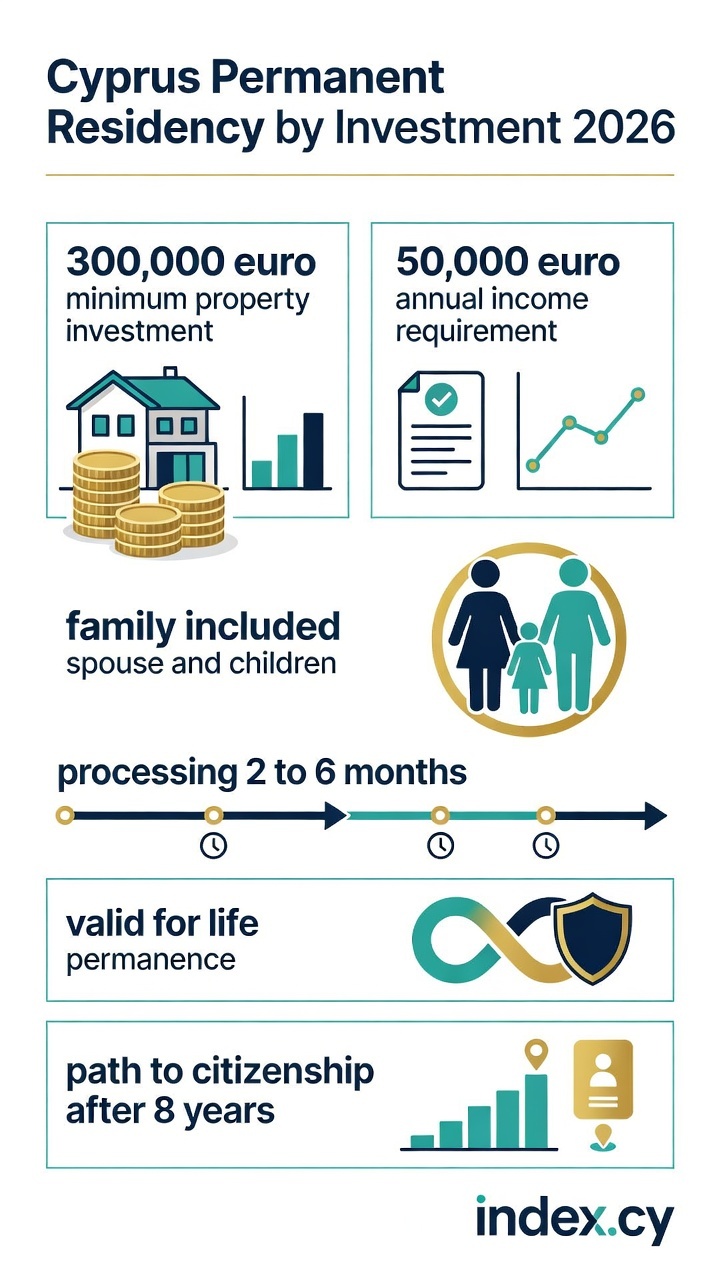
The investment is only half the picture. Cyprus wants evidence that you can support yourself and your family without relying on the local economy or taking a local job.
The current income thresholds are clear:
So a couple with two children needs to demonstrate roughly €85,000 in annual income from abroad. Acceptable sources include salary, pensions, dividends, rental income from other countries, and business profits. The income must be documented and, in most cases, shown to be stable and recurring.
This income requirement was raised in 2023 (from €30,000), so older guides you may find online are out of date. Always confirm the current figure with a licensed professional before you apply.
Beyond income, applicants must pass due diligence and background checks, hold a clean criminal record, and secure private health insurance in Cyprus. The main applicant and adult dependents also confirm they do not intend to take up employment in Cyprus, though owning a company and receiving dividends is permitted.
Choosing the right property does two jobs at once: it satisfies the €300,000 investment rule and gives you a home or income asset you actually want. Cyprus offers five districts, each with a distinct character and price point.
Limassol is the island’s most expensive and cosmopolitan market, home to the marina, international business, and a large expat community. New-build apartments in Limassol sit at the premium end, so reaching €300,000 is easy, and demand for high-end rentals is strong.
Paphos blends coastline, golf resorts, and a long-established international community, often at 30-35% below Limassol prices. It is a favourite for retirees and lifestyle buyers who want value.
Larnaca is rising fast, powered by its airport, the new marina redevelopment, and comparatively affordable new-build stock. Nicosia, the inland capital, offers the most affordable entry points and steady rental demand from students and professionals. Famagusta, including the Protaras and Ayia Napa areas, appeals to holiday-home and short-let investors.
When it comes to property types, new-build apartments are the most common choice for the residential route because they are widely available from developers and easy to rent. Buyers seeking more space and privacy often look at villas for sale, while those prioritising income sometimes combine the two required units. Investors who prefer the flexibility of resale should note that only commercial property qualifies as pre-owned under the programme.
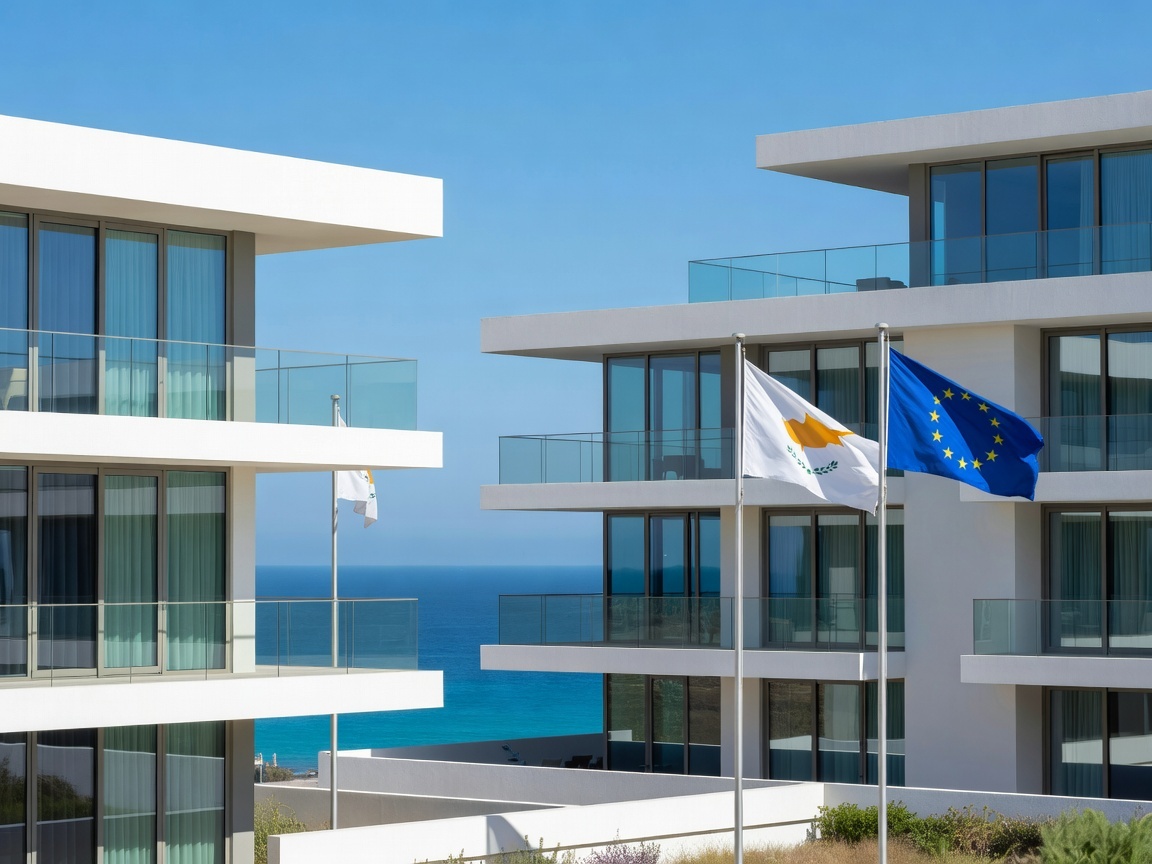
Before committing, verify the property’s real market value and legal status. An independent property inspection and an instant property report help you confirm you are paying a fair price and that the title is clean, which matters even more when the purchase is tied to your residency.
The fast-track programme earns its name. With documents in order, decisions typically arrive within two to six months. Here is how the process unfolds.
Most applicants work with a licensed lawyer to manage contracts, translations, and filings. The legal and administrative costs are modest relative to the investment, but they are a real line item to budget for, alongside property transfer fees and taxes.
Permanent residency comes with clear benefits and equally clear responsibilities. Understanding both keeps your status secure.
What you gain:
What you must do:
It is important to be realistic about the limits. Permanent residency is not free movement across the EU; it grants the right to reside in Cyprus, not in other member states. For long stays elsewhere in Europe, standard Schengen and national rules still apply.
For families with a longer horizon, permanent residency can be the first step toward a Cypriot passport. PR holders may apply for citizenship after eight years of actual residence in Cyprus within a ten-year period (reduced to seven years, or five in some cases, for those more integrated). Citizenship brings full EU rights, including free movement and the ability to live and work anywhere in the Union. It requires genuine, sustained presence on the island, so it suits those who truly relocate rather than treat residency as a paper status.
The answer depends on your goals. For buyers who want a Mediterranean home, a foothold in the EU, and a resilient asset, the programme is compelling. The table below sets the essentials side by side.
| Factor | Cyprus Permanent Residency (Category 6.2) |
|---|---|
| Minimum investment | €300,000 + VAT |
| Qualifying assets | New residential property, resale commercial property, company shares, or funds |
| Income required | €50,000/year (+€15,000 spouse, +€10,000 per child) |
| Processing time | Typically 2-6 months |
| Family included | Spouse and dependent children |
| Physical residence | Visit once every 2 years |
| Validity | For life (must retain investment) |
| Path to citizenship | After 8 years of residence |
The strongest case for the programme is that your capital does not disappear into a government fee. It buys a real asset that can appreciate and generate rent. A well-chosen new-build apartment in a strong rental district can offset holding costs while your residency stays active. This is where doing the numbers matters: our guide to real estate investing in Cyprus walks through rental yields and appreciation trends by district.
The main tradeoffs are the new-build requirement (which narrows residential choices to developer stock) and the lifelong obligation to hold the asset. Buyers who value flexibility should weigh these carefully. As always, the property has to make sense on its own merits, not only as a route to residency.
Permanent residency in Cyprus offers non-EU families a clear, asset-backed path to a lifelong base inside the European Union. The formula is simple to state: invest at least €300,000 in qualifying property, show €50,000 or more in annual income from abroad, pass due diligence, and keep the investment in place. In return, you and your family gain the right to call Cyprus home for life, with a possible route to citizenship after eight years.
The details, though, are where applications succeed or stall. The residential property must be new and bought from a developer. The income thresholds have risen and must be documented. The investment must be retained for life. Getting these right from the start saves months.
Start with the property, because it anchors everything. Explore new-build listings across Limassol, Paphos, and Larnaca on index.cy, verify value with an instant report, and confirm the legal picture before you sign. When the property is right, the residency follows.
This guide is for general information and reflects the rules as understood in 2026. Immigration and tax regulations change. Always confirm current requirements with a licensed Cyprus lawyer or the Civil Registry and Migration Department before applying.