
What this guide covers
- Why You Need Home Insurance in Cyprus
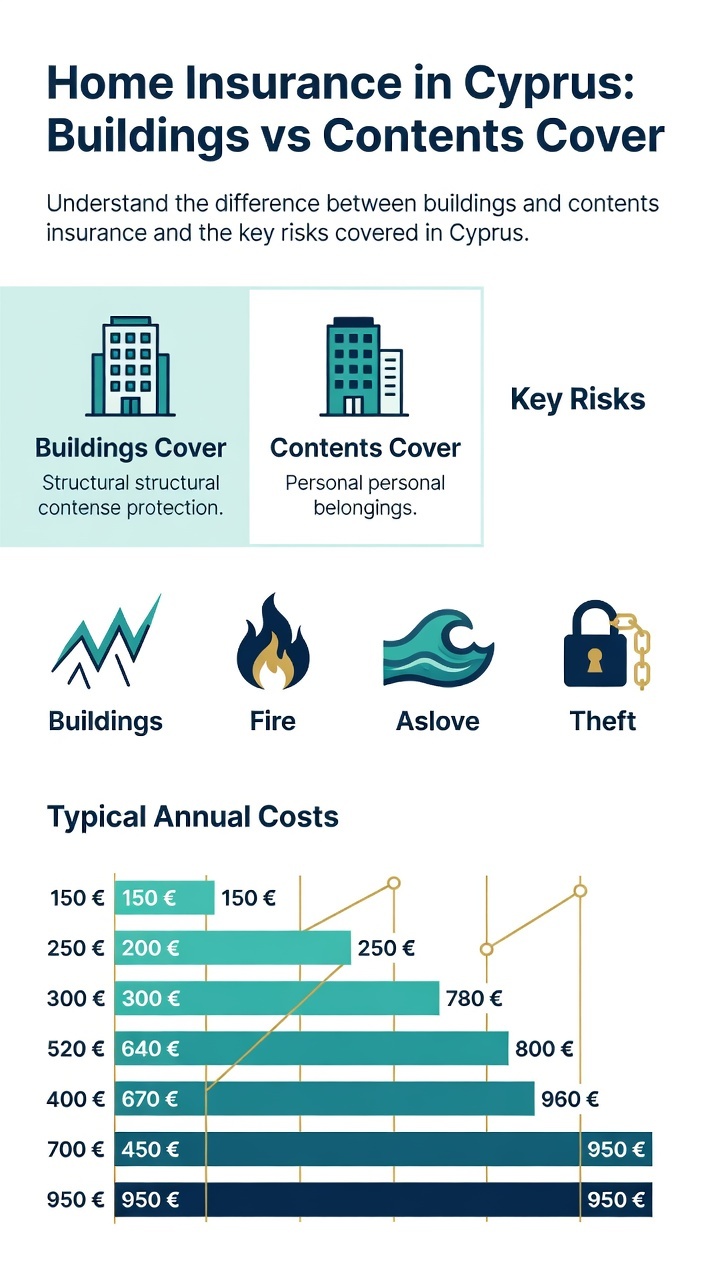
- What Home Insurance in Cyprus Covers: Buildings vs Contents
- How Much Does Home Insurance in Cyprus Cost in 2026?
- Key Risks a Home Insurance Policy in Cyprus Should Cover
- Home Insurance and Your Mortgage in Cyprus
- How to Choose the Right Home Insurance Policy in Cyprus
- Home Insurance for Landlords and Holiday Homes in Cyprus
- Home Insurance in Cyprus: Quick FAQ
- Is home insurance mandatory in Cyprus?
- Does home insurance in Cyprus cover earthquakes?
- How much does home insurance in Cyprus cost?
- Should I insure my Cyprus home for market value or rebuild cost?
- Can I insure a Cyprus property that I rent out?
- Conclusion: Protect the Investment, Not Just the Purchase
Home insurance in Cyprus rarely makes anyone’s list of exciting things about buying a Mediterranean property, yet it is one of the most important. Whether you have just bought an apartment in Limassol, a villa in Paphos or a stone house inland, the right policy protects the single largest purchase most people ever make. And if you take out a mortgage, buildings cover is not even optional: Cyprus lenders require it before they release the loan.
This guide explains how home insurance in Cyprus actually works in 2026: the difference between buildings and contents cover, what a typical policy costs, the specific risks a Cyprus home faces (earthquakes and winter flooding among them), and how to choose a policy that pays out when you need it. index.cy is a property marketplace rather than an insurer, so the goal here is to help you ask the right questions before you sign, and the figures below are typical market ranges, not quotes.
Why You Need Home Insurance in Cyprus
There is no law forcing an owner-occupier to insure their home in Cyprus. In practice, though, going without cover is a gamble few sensible owners take. A single fire, burst pipe or earthquake can wipe out hundreds of thousands of euros of value in minutes, and the cost of rebuilding is far higher than most people assume.
For anyone buying with finance, home insurance in Cyprus is effectively mandatory. Banks insist on buildings insurance equal to the full rebuild cost before releasing mortgage funds, and they usually ask to be named on the policy as an interested party. Our guide to financing your property purchase in Cyprus explains where insurance fits into the wider mortgage process.
Cyprus also carries a specific risk profile that makes cover worthwhile even for cash buyers. The island sits in an active seismic zone in the eastern Mediterranean, summers bring a real wildfire threat, and short, intense winter downpours can cause flash flooding and water damage. Add the cost of importing materials and skilled labour, and the case for insuring your Cyprus home becomes hard to argue with.
One nuance catches out apartment buyers. If you own a flat in a managed complex, the building’s shared structure may be covered by a communal block policy paid through your service charge. That policy rarely covers the inside of your unit or your belongings, so you still need your own contents and interior cover. Always confirm exactly what the block policy includes before assuming you are protected.
What Home Insurance in Cyprus Covers: Buildings vs Contents
Home insurance in Cyprus is built from two core parts, usually sold together but priced separately. Understanding the split is the key to buying the right amount of cover.
Buildings insurance protects the physical structure: walls, roof, floors, fitted kitchens and bathrooms, built-in wardrobes, permanent fixtures, and often boundary walls, garages and swimming pools. The critical point is that buildings cover is based on the rebuild cost, not the market value or the price you paid. Rebuild cost is what it would take to demolish and reconstruct the property, and in Cyprus it is frequently lower than the purchase price (which includes the land) but can still run to several hundred thousand euros.
Contents insurance covers your movable possessions: furniture, appliances, electronics, clothing, and valuables such as jewellery. You insure contents for the cost of replacing everything as new. Many owners underestimate this figure badly, so it helps to walk through each room and tally up what a full replacement would actually cost.
Most policies bundle in a third element, liability cover, which protects you if a visitor is injured on your property or your home causes damage to a neighbour, for example through an escaping water leak. The table below summarises the three layers.
| Cover type | What it protects | How the sum insured is set |
|---|---|---|
| Buildings | Structure, roof, walls, fitted kitchens and bathrooms, pools, boundary walls | Full rebuild cost (not market value) |
| Contents | Furniture, appliances, electronics, clothing, valuables | Cost to replace all belongings as new |
| Liability | Injury to visitors or damage to neighbouring property | A fixed limit, often €150,000 – €500,000 |
To sense-check a rebuild figure, it helps to know how Cyprus property values behave. Our data on the average price of a house in Cyprus gives a useful reference point, though remember to strip out land value when you estimate rebuild cost rather than market price.
How Much Does Home Insurance in Cyprus Cost in 2026?
Home insurance in Cyprus is relatively affordable by European standards. Most policies fall between roughly €150 and €950 a year, with the exact premium driven by rebuild value, floor area, location and the level of cover you choose. As a 2026 guide:
| Property and cover | Typical annual premium | Notes |
|---|---|---|
| Apartment, contents only | €90 – €180 | Structure covered by the complex block policy |
| 2–3 bed apartment, buildings + contents | €180 – €320 | Standard combined cover for an owner-occupier |
| 3 bed villa, ~€300k rebuild, full cover | €480 – €650 | Buildings, contents and liability together |
| High-value villa with pool | €700 – €1,200+ | Larger rebuild value, extra features, higher contents |
Several factors move your premium up or down. The biggest is the rebuild sum insured, followed by the property’s size and construction. Location matters too: a home near a river course or on a slope may attract a higher flood or subsidence loading. Security features such as alarms, shutters and reinforced doors can reduce contents premiums, while a poor claims history or optional extras like accidental damage will push them up.
Construction costs feed directly into these numbers. The Cyprus Statistical Service publishes a construction cost index that has climbed steadily in recent years, which is exactly why insurers index-link buildings cover and why you should review your rebuild figure at each renewal rather than letting it drift.
Key Risks a Home Insurance Policy in Cyprus Should Cover
Not all policies are equal, and the cheapest quote is rarely the one that pays out cleanly. When comparing home insurance in Cyprus, check that the following risks are genuinely included rather than buried in the exclusions.
- Earthquake — Cyprus lies in a seismic region, so earthquake cover is essential. It is usually included in comprehensive policies, but some cheaper products make it optional or apply a higher excess, so confirm it explicitly.
- Fire and wildfire — standard on every policy, and particularly relevant for homes near open countryside or forest during the long, dry Cypriot summer.
- Storm and flood — sudden winter downpours cause flash flooding and water ingress; make sure both storm and flood damage are covered, not just one.
- Escape of water — burst pipes, failed boilers and leaking tanks are among the most common household claims and should be included as standard.
- Theft and burglary — covers contents stolen after forced entry; premiums fall if you have approved locks and an alarm.
- Subsidence and accidental damage — often optional add-ons, worth considering on older or hillside properties.
Because so much hinges on the condition of the structure, it is wise to understand exactly what you are insuring before you buy. A professional survey through the index.cy property inspection service flags structural issues, damp and roof problems that could later trigger a dispute over a claim, and it helps you set an accurate rebuild value from the outset.
Home Insurance and Your Mortgage in Cyprus
If you are buying with a loan, the lender controls the terms. Cyprus banks require buildings insurance for the full rebuild cost as a condition of the mortgage, and the policy must be in place before completion. The bank is usually recorded on the policy as an interested party or loss payee, meaning a major claim payout can be directed towards protecting the outstanding loan.
A common misconception is that you must buy the bank’s own insurance product. You do not. Lenders can offer a convenient in-house policy, but you are almost always free to arrange cover elsewhere, provided it meets their minimum requirements. Shopping around with an independent insurer or broker often produces a better price and broader cover, so it is worth comparing before you accept the default option.
The short video below walks through the wider do’s and don’ts of buying property in Cyprus, useful context for understanding where insurance sits alongside legal checks, surveys and financing.
Whichever route you take, keep the paperwork tidy. Banks will ask for proof of a valid, in-force policy each year, and letting cover lapse can technically breach the mortgage terms.
How to Choose the Right Home Insurance Policy in Cyprus
Choosing home insurance in Cyprus comes down to matching real risks to genuine cover, then reading the fine print. Work through this checklist before you commit:
- Insure for rebuild cost, not market value. Over-insuring wastes money; under-insuring can trigger an ‘average’ clause that cuts every payout proportionally. Aim for an accurate rebuild figure.
- Confirm earthquake cover is included. In a seismic country this is non-negotiable; check the sum insured and the excess that applies to a quake claim.
- Read the exclusions and excesses. The headline premium means little if wear and tear, gradual damp or an empty-property clause quietly removes cover when you need it.
- Check the policy is index-linked. This keeps your rebuild value rising with construction costs so you are not left underinsured after a few years.
- Get the policy wording in English. If English is your first language, insist on documentation you can fully understand before signing.
- Use a licensed insurer or broker. Deal only with regulated providers; the Insurance Association of Cyprus lists established member companies operating on the island.
Finally, treat renewal as an active decision rather than a formality. Rebuild costs, contents values and your own circumstances change, and the official services portal at gov.cy is a reliable starting point for checking regulatory and consumer-protection details. Reviewing your home insurance in Cyprus once a year keeps the cover matched to the property.
Home Insurance for Landlords and Holiday Homes in Cyprus
Standard home insurance in Cyprus is written for owner-occupiers, and it can quietly fall away the moment a property is rented out or left empty for long periods. That catches out a lot of investors and second-home owners, so it pays to match the policy to how the property is actually used.
If you let your property, whether on a long lease or as a short-term holiday rental, you need a landlord or holiday-home policy rather than a standard one. These add features owner-occupier cover lacks, such as protection against tenant-caused damage, public liability for paying guests, and loss-of-rent cover if the home becomes uninhabitable after an insured event. This matters most for the villas and apartments that dominate the Cyprus holiday-let market.
Watch the unoccupancy clause carefully too. Many policies restrict or void cover if a home stands empty beyond 30 or 60 consecutive days, which is a real trap for seasonal owners who visit only in summer. If your Cyprus home sits empty for months, tell your insurer and arrange the right unoccupied-property terms rather than assuming standard cover still applies.
Home Insurance in Cyprus: Quick FAQ
Is home insurance mandatory in Cyprus?
Not by law for owner-occupiers. However, if you buy with a mortgage, the lender will require buildings insurance for the full rebuild cost as a condition of the loan, so in practice most buyers need it.
Does home insurance in Cyprus cover earthquakes?
Comprehensive policies usually include earthquake cover, which is important given Cyprus sits in a seismic zone. Cheaper policies may make it optional or apply a higher excess, so always confirm earthquake cover is included before buying.
How much does home insurance in Cyprus cost?
Most policies range from around €150 to €950 a year. A typical 3-bedroom villa with combined buildings, contents and liability cover generally costs between €480 and €650, depending on rebuild value and features.
Should I insure my Cyprus home for market value or rebuild cost?
Insure buildings for the rebuild cost, which is what it would take to reconstruct the property. Market value includes land and location, so using it usually leads to over-insuring and paying too much.
Can I insure a Cyprus property that I rent out?
Yes, but you need a landlord or holiday-home policy rather than standard owner-occupier cover. These include tenant damage, guest liability and loss of rent, and they handle the unoccupancy periods common with seasonal lets.
Conclusion: Protect the Investment, Not Just the Purchase
Buying a home in Cyprus is a major financial commitment, and home insurance is what keeps that commitment safe. For a few hundred euros a year, buildings and contents cover shields you from fire, earthquake, flood and theft, and it is a firm requirement if you buy with a mortgage. The mistake most owners make is treating insurance as an afterthought rather than part of the purchase itself.
Get the essentials right and you rarely regret it. Insure for the rebuild cost, confirm earthquake and flood cover are included, read the exclusions, and match the policy to how you actually use the property. Review it every year so the cover keeps pace with rising construction costs.
Still house-hunting? Browse current houses for sale in Cyprus, work through the essentials in our due diligence guide for buying property in Cyprus, and line up the right home insurance before you collect the keys, so you protect the investment from day one.
Keep reading

Record-Breaking Property Sales in Cyprus This September The Cyprus real estate market demonstrated robust growth in September 2026, with a total of…

Cyprus Property Sales Soar to New Heights in September 2026 The Cyprus real estate market continues its impressive upward trajectory, with 1,681…

We analysed 46 Xylofagou, Larnaca listings: 16 houses, 18 plots and 11 apartments, most 3-bed houses near EUR305,000. See prices and what…