What this guide covers
- Why Traditional Village Houses in Cyprus Appeal to Buyers
- Where to Find Traditional and Stone Houses in Cyprus
- What Traditional Village Houses Cost in Cyprus (2026)
- Restoring a Stone House: Costs, Stages and Timeline
- Legal Checks: Title Deeds, Permits and Heritage Rules
- Buying a Village House as a Foreigner (and Financing It)
- Are Traditional Village Houses in Cyprus a Good Investment?
- Common Mistakes to Avoid When Buying a Village House
- Traditional Village Houses in Cyprus: Quick FAQ
- Can foreigners buy a traditional village house in Cyprus?
- How much does it cost to restore a stone house in Cyprus?
- Are village houses cheaper than coastal property in Cyprus?
- What is the biggest risk with a traditional village house?
- Conclusion: Buy the Village, Not Just the House
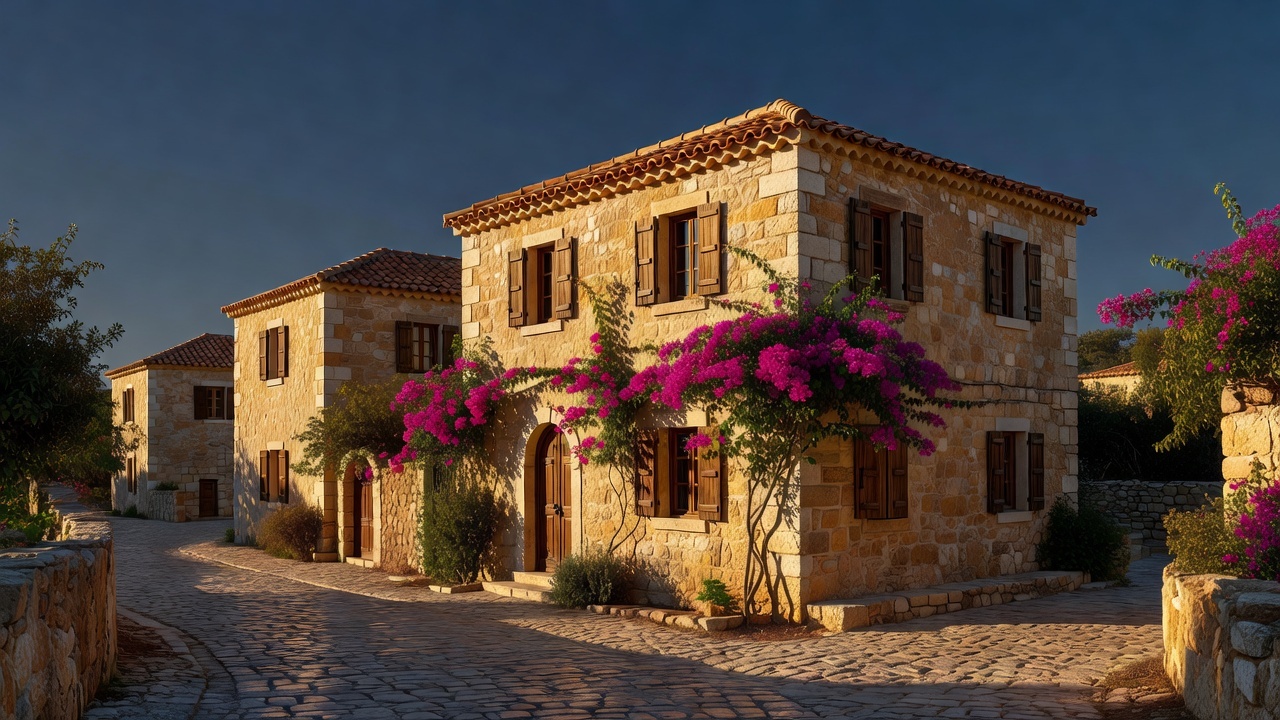
Traditional village houses in Cyprus are having a moment. While most buyers chase glass-and-steel apartments along the coast, a growing group of expats, downsizers and investors is heading inland to the island’s stone-built villages. These honey-coloured homes offer thick walls, shaded courtyards and a slower pace of life, often at a fraction of the price of a modern coastal unit.
But buying a traditional stone house in Cyprus is not the same as buying a new apartment. Prices look tempting, yet restoration costs, title-deed complications and planning rules can catch first-time buyers off guard. This guide walks you through where to find village houses, what they cost in 2026, how much a sensible restoration runs to, and the legal checks that protect your money.
Why Traditional Village Houses in Cyprus Appeal to Buyers
The appeal starts with the architecture. Traditional Cypriot houses were built from local limestone and mudbrick, with walls up to 60cm thick that keep interiors cool through 40°C summers and warm in winter. Many feature an internal courtyard, an arched iliakos (covered terrace), timber-beamed ceilings and terracotta floor tiles. These are qualities you simply cannot reproduce in a new build.
Lifestyle is the second driver. Villages such as Kakopetria, Lofou, Kalavasos, Tochni and the wine-region settlements above Limassol offer community, authenticity and mountain air. For remote workers and retirees, a village base delivers space and character that a coastal apartment rarely matches.
Price is the third factor. A habitable village house inland can cost far less per square metre than a comparable coastal home. That gap is why searches for stone and village houses keep climbing, and why buyers who once looked only at the sea are now exploring the interior.
Where to Find Traditional and Stone Houses in Cyprus
Traditional houses cluster in specific areas, and the district you choose shapes both price and lifestyle.
Paphos region. The hill villages behind Paphos, including Kathikas, Polis, Pano Akourdaleia and Droushia, are the most popular hunting ground for expat restorers. Demand from UK and European buyers is strong here, and you will find a steady supply of stone properties in various states of repair. Browse current listings for property in Paphos to gauge the market.
Limassol wine villages. The Krasochoria above Limassol, including Omodos, Lofou and Vouni, combine tourism appeal with genuine heritage. Prices are higher than in remote villages because of proximity to the city and the popularity of the wine route.
Larnaca and Famagusta interior. Villages such as Tochni, Kalavasos, Lefkara (famous for its lace) and Kato Drys offer some of the island’s best value. Lefkara in particular has protected traditional streetscapes.
Troodos foothills and Nicosia region. Kakopetria, Galata and Fikardou (a preserved heritage village) sit in cooler, greener surroundings and attract summer-home buyers.
When you compare options, look beyond the house itself at the houses for sale in Cyprus more broadly, and remember that some village plots are sold with adjoining land you can develop later. If a ruin comes with a large garden, check the plots of land for sale category to understand what building land is worth in that area.
What Traditional Village Houses Cost in Cyprus (2026)
Prices vary enormously with condition, size and location. The single biggest variable is whether a house is habitable, needs cosmetic work, or is a full ruin. As a rough 2026 guide:
| Property condition | Typical price range | Notes |
|---|---|---|
| Ruin / shell (needs everything) | €25,000 – €70,000 | Often no roof or services; restoration cost dominates |
| Habitable but dated | €80,000 – €160,000 | Sound structure, old kitchen/bathroom, ready to modernise |
| Fully restored village house | €180,000 – €400,000+ | Turn-key, often with pool or landscaped courtyard |
| Restored house in a premium village | €350,000 – €700,000+ | Omodos, Lofou, Lefkara, sea-view hill plots |
These ranges sit well below coastal villa pricing. For context on the wider market, see our data on the average price of a house in Cyprus, then adjust downward for inland villages and upward for premium heritage settlements.
Two cost warnings matter. First, a cheap ruin is rarely cheap once restored, so always price the finished project, not the purchase. Second, prime restored houses in famous villages now rival coastal homes because supply is limited and demand is international.
Restoring a Stone House: Costs, Stages and Timeline
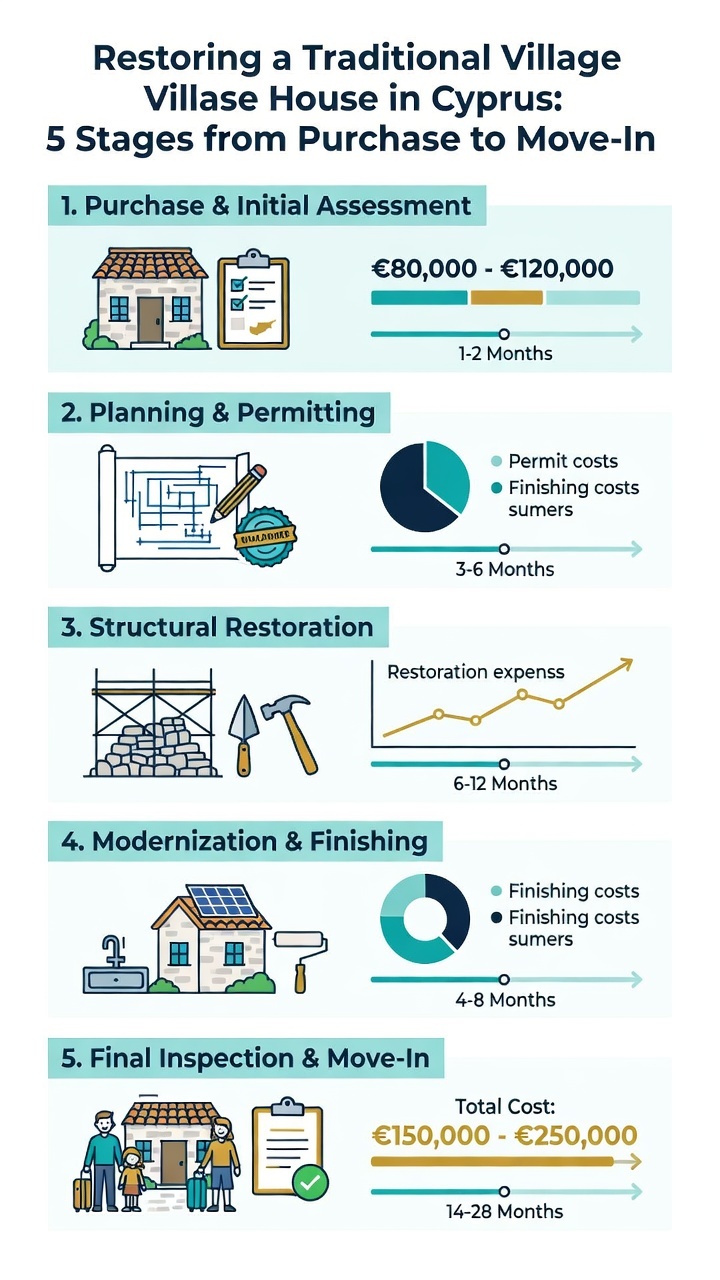
Restoration is where traditional village houses reward careful planning and punish the unprepared. A full restoration of a stone shell typically costs €1,200 to €2,200 per square metre in 2026, depending on finish level, access and how much original fabric you preserve. A 120m² ruin can therefore absorb €150,000 to €260,000 in works on top of the purchase price.
Budget for the specifics that stone houses demand:
- Structural and roof works — new timber roof structure, waterproofing and terracotta tiles.
- Damp and stone repair — repointing with lime mortar (not cement), which lets old walls breathe.
- Services from scratch — many ruins have no modern electrics, plumbing or drainage.
- Insulation and glazing — discreet upgrades that keep the character but meet modern comfort standards.
- Access and logistics — narrow village lanes raise labour and delivery costs.
A realistic timeline runs 9 to 18 months from purchase to move-in, longer if you need planning consents or specialist craftsmen. Before you commit, arrange a professional structural survey through a service like the index.cy property inspection service so you know exactly what you are taking on. A €600 survey can save you tens of thousands in surprises.
Legal Checks: Title Deeds, Permits and Heritage Rules
The legal side is where traditional houses in Cyprus differ most from new builds, and where due diligence protects you.
Title deeds. Older village properties are the classic setting for missing or shared title deeds. Ownership may be split among several heirs, boundaries may be informal, and the registered area may not match reality. Verify everything with the government’s Department of Lands and Surveys before you pay a deposit, and never rely on a seller’s verbal assurance.
Planning and building permits. Restoring or extending a heritage property usually requires permits from the local authority and, in protected villages, approval that respects the traditional façade. The national services portal at gov.cy explains which consents apply and how to apply. In designated traditional settlements, grants and incentives may be available for sympathetic restoration.
Heritage protection. Villages such as Fikardou, Lefkara and parts of Omodos carry preservation controls. These protect value but limit what you can change, so read the rules before you fall in love with a property.
Work through every step in our comprehensive due diligence guide when buying property in Cyprus, and always instruct an independent lawyer who is not connected to the seller or agent.
Buying a Village House as a Foreigner (and Financing It)
Non-Cypriot buyers can purchase traditional village houses, with one practical limit: non-EU nationals need Council of Ministers approval to buy property, which is routine for a single home. EU citizens face no such restriction.
Financing a restoration project is more complex than financing a finished home. Cyprus banks lend readily against habitable, title-clear properties but are cautious about ruins with no deeds or no services. Many restorers therefore buy in cash and fund works from savings, or secure a loan only once the deeds and permits are clean. Our guide to financing your property purchase in Cyprus explains mortgage options, deposit levels and what lenders expect.
The video below gives a real feel for traditional Cypriot village houses and rural life, useful context before you start viewing properties in person.
Factor in the full cost stack too: transfer fees or VAT, legal fees of roughly 1%, survey costs, and ongoing village-house maintenance. Data from the Cyprus Statistical Service tracks construction-cost inflation, which has kept restoration budgets rising in recent years.
Are Traditional Village Houses in Cyprus a Good Investment?
For the right buyer, yes, but the case rests on lifestyle plus selective demand rather than pure yield.
A well-restored stone house in a sought-after village holds and grows its value because supply is fixed. No developer can build new “authentic” 200-year-old houses, so genuine character commands a premium over time. Restored homes in Omodos, Lofou and Lefkara have proved this repeatedly.
Rental potential is real but seasonal. Village houses perform well as boutique holiday rentals in spring and autumn, less so in deep winter. If you want stronger year-round yields, a coastal apartment or villa may suit better, and you can compare both strategies before deciding.
The weakest investment case is the over-restored ruin in a remote village with no community and poor access. Spend €250,000 restoring a house that will only ever be worth €180,000 and the numbers never recover. Discipline on location and budget is everything.
Common Mistakes to Avoid When Buying a Village House
Most village-house regrets trace back to a handful of avoidable errors. Learn them before you view a single property.
- Falling for the price, not the project. A €40,000 ruin feels like a steal until you add a €200,000 restoration. Always underwrite the total finished cost against realistic resale value in that specific village.
- Skipping the title-deed check. Shared inheritance, missing deeds and boundary disputes are common in old villages. Never pay a deposit before an independent lawyer confirms clean, transferable title.
- Ignoring access and services. A romantic house down a donkey-width lane can be a logistics nightmare for builders and a dead end for resale. Confirm vehicle access, mains water, electricity and internet.
- Using cement instead of lime. Modern cement renders trap moisture inside old stone walls and cause them to crumble. Insist on traditional lime mortar and heritage-experienced craftsmen.
- Buying in a village with no life. A settlement with a shrinking, ageing population and no shop or café offers weak community and weak resale demand. Visit at different times and talk to locals first.
Traditional Village Houses in Cyprus: Quick FAQ
Can foreigners buy a traditional village house in Cyprus?
Yes. EU citizens buy freely, while non-EU buyers need routine Council of Ministers approval to purchase one home. Both should verify title deeds before paying a deposit.
How much does it cost to restore a stone house in Cyprus?
Budget roughly €1,200 to €2,200 per square metre in 2026 for a full restoration, so a 120m² shell can absorb €150,000 to €260,000 in works on top of the purchase price.
Are village houses cheaper than coastal property in Cyprus?
Generally yes. Inland village houses cost significantly less per square metre than comparable coastal homes, though restored properties in famous heritage villages can match or exceed coastal prices.
What is the biggest risk with a traditional village house?
Two risks dominate: underestimating restoration costs and title-deed problems. Both are manageable with a professional survey, an independent lawyer and disciplined budgeting.
Conclusion: Buy the Village, Not Just the House
Traditional village houses in Cyprus offer something modern property cannot: thick-walled comfort, real heritage and a genuine sense of place, often at inland prices. The upside is character and value in the right settlement. The risk is underestimating restoration costs and skipping legal checks on title deeds and permits.
Get three things right and you will rarely regret it. Choose a village with community, access and demand. Price the finished project, not the bargain purchase. And complete full due diligence, backed by an independent survey and lawyer, before you commit a cent.
Ready to start? Explore current houses for sale in Cyprus, study the average house price data for your target district, and use index.cy’s tools to buy your traditional Cyprus home with confidence rather than guesswork.
Keep reading
We analysed 136 Agios Dometios, Nicosia listings: 67 apartments, 8 houses, 16 plots and 24 rentals. Median 2-bed costs EUR192,500. See prices…
Cyprus Property Market Braces for Supply Shift Amid Rising Permits and Affordability Challenges The Cyprus real estate market is set to experience…

Larnaca Property Market Surges: Which Areas Are Leading the Price Rise? Larnaca’s property market has experienced a notable surge in prices recently,…