What this guide covers
Cyprus Water Shortage: A New Challenge for the Real Estate Market
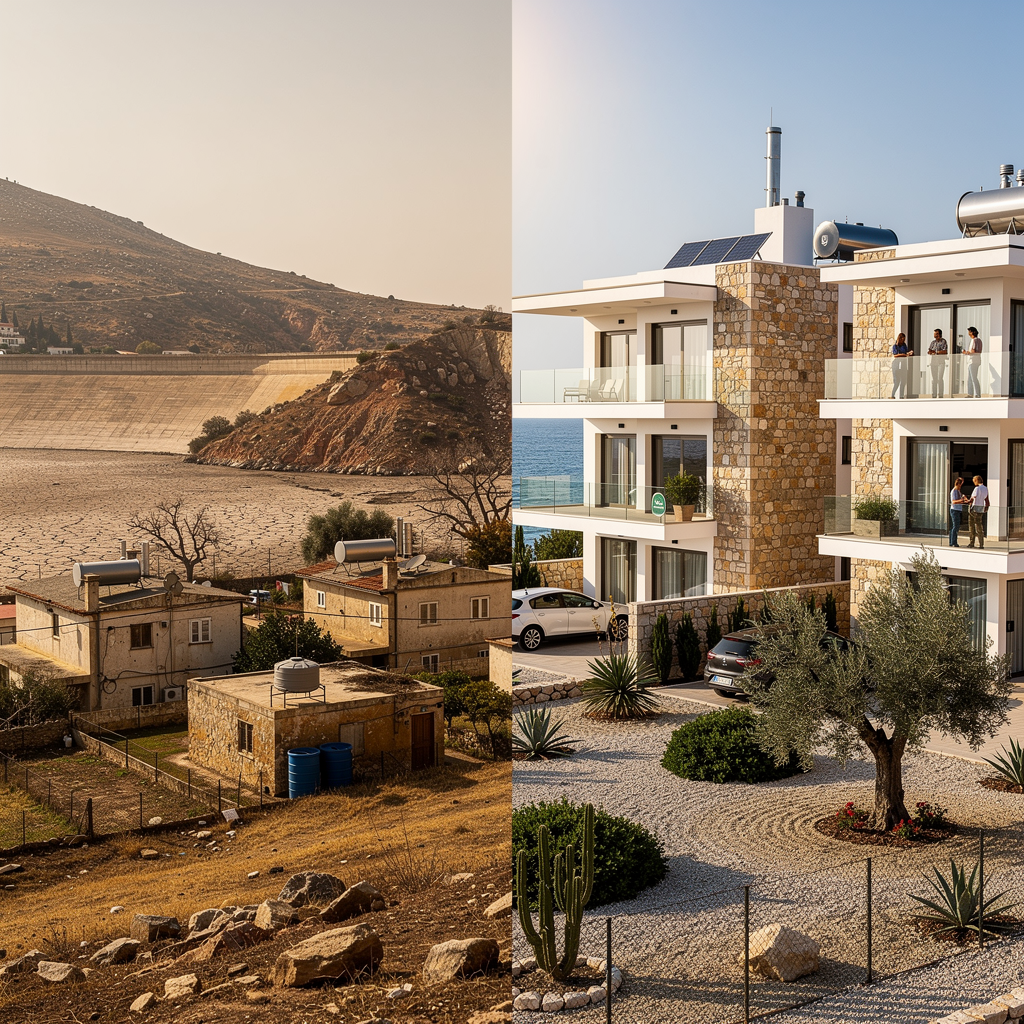
Cyprus is currently grappling with one of the most severe water shortages in recent history, a situation that increasingly impacts the island’s property sector. With reservoir levels dropping and summer demand peaking, stakeholders including government bodies, regulators, and EU representatives are advocating for major reforms in water management. These changes are poised to affect water distribution, pricing, and the integration of water solutions in new developments.
Summer 2026: A Critical Water Forecast
Stefanos Stefanou, the General Secretary of AKEL, has issued a stark warning for summer 2026, describing the outlook as “nightmarish.” He highlights that shortages could impact not just households and farms, but also electricity production and the broader economic health of the island. For investors, developers, and property owners, water availability is evolving from a mere utility concern to a critical factor influencing investment decisions.
The root causes include long-standing underinvestment, poorly maintained infrastructure, and delayed implementation of key projects, all exacerbated by the growing impacts of climate change across the Mediterranean region.
Core Water Infrastructure Challenges:
- High volumes of water lost due to ageing pipes and leakages.
- Slow connection of recycled water networks such as those at Tersefanou and the Solia dam.
- Setbacks in launching new desalination facilities.
- Reduced capacity following previous desalination contract disruptions.
- A reported loss of 1.5 million cubic meters at Mavrokolymbos dam owing to maintenance issues.
Stefanou insists that water must be considered a social good, cautioning against shifting undue burden onto households and farmers for systemic policy gaps.
Golf Courses and Leisure Properties: Facing Water Restrictions
The Water Development Department (WDD official site) has declared that from May 2026, golf courses will no longer receive state dam water supplies. This enforcement follows a policy initiated in 2005 and strengthened by legislation in 2017 aimed at aquifer protection and EU compliance.
Golf-related residential complexes like Minthis Hills, Elea Estate, and Limassol Greens have already adapted to alternative water sources such as recycled or desalinated water. Others are in the process of detaching from dam-dependent supplies.
Alongside, water pricing reforms have raised costs significantly:
- Golf course water tariffs have increased from €0.36 to €0.42 per cubic meter.
- The environmental fee has quadrupled from €0.02 to €0.08 per cubic meter.
- Farmers continue to benefit from much lower rates.
This shift signals a need for new developments, especially large-scale golf resorts, to incorporate alternative water solutions and demonstrate stronger sustainability to attract buyers and meet operational demands.
EU Involvement: Funding and Pressure for Change
On a European level, EU Water Resilience Commissioner Jessika Roswall has emphasized the unsustainability of chronic underfunding in water infrastructure within member states. She advocates for fully leveraging EU cohesion funds and highlights a €15 billion investment facility from the European Investment Bank aimed at water resilience projects.
For Cyprus, this creates both urgency and opportunity to:
- Upgrade aging infrastructure and reduce leakages.
- Expand desalination capacity steadily.
- Increase use of recycled water technologies.
- Strengthen climate resilience strategies.
Agriculture Minister Maria Panayiotou confirmed that Cyprus is already undertaking EU-supported initiatives to monitor losses and develop an integrated resilience framework.
The Impact on Real Estate: A Game-Changer
Water scarcity has emerged as a core risk for Cyprus’ property market. With tourism expected to attract nearly four million visitors this summer, demand for holiday homes, resorts, and short-term rental investments remains strong, but sustainable water practices are vital.
Developers are likely to encounter:
- Stricter environmental and water management assessments.
- Mandatory implementation of water-saving technologies in hotels and large-scale projects.
- More detailed scrutiny regarding water supply sources during planning approvals.
- Higher operational expenses where desalination is required.
Buyers, particularly international investors, are prioritizing properties with strong environmental, social, and governance (ESG) features and assurances of long-term water infrastructure resilience.
At a Crossroads: Strategic Decisions Ahead
Cyprus faces an inflection point. Immediate pressures such as falling dam levels, agricultural water demand, and high tourist consumption coincide with deep-seated infrastructure challenges. Key developments to watch include the integration of recycled water projects, timely commissioning of desalination plants, measurable reductions in leakages, and effective absorption of EU funding.
For anyone exploring options like affordable houses and villas for sale in Cyprus, understanding water sustainability will be crucial for assessing long-term property value and security.
As EU experts caution, investing today in water resilience could save Cyprus from far costlier consequences down the road.
Keep reading
Growing Demand for Cyprus Property as Russian Buyers Shift Focus in 2026 Recent data reveals a notable surge in interest among Russian…
We analysed 136 Agios Dometios, Nicosia listings: 67 apartments, 8 houses, 16 plots and 24 rentals. Median 2-bed costs EUR192,500. See prices…

Cyprus Property Market Braces for Supply Shift Amid Rising Permits and Affordability Challenges The Cyprus real estate market is set to experience…