What this guide covers
- Why Living in Paphos Appeals to So Many Expats
- The Cost of Living in Paphos in 2026
- Best Areas to Live in Paphos
- Kato Paphos (Lower Paphos)
- Coral Bay and Peyia
- Tala and the Villages
- Chloraka and Kissonerga
- Healthcare, Schools, and Daily Life in Paphos
- The Climate and Lifestyle in Paphos
- Getting Around, Working, and Connectivity
- Property Prices: Renting vs Buying in Paphos
- Pros and Cons of Living in Paphos
- Frequently Asked Questions
- Is Paphos cheaper than Limassol?
- How much do you need to live comfortably in Paphos?
- Is Paphos good for British expats?
- Do I need a car in Paphos?
- Final Thoughts on Living in Paphos
Living in Paphos has become the dream for thousands of British, German, and Scandinavian residents who want Mediterranean sunshine without a Mediterranean price tag. This western Cyprus city pairs 320-plus sunny days a year with one of the largest and most settled English-speaking communities in the country. For first-time movers and retirees alike, it offers a slower pace, lower costs than Limassol, and a coastline that runs from a UNESCO-listed harbour to the sandy bays of Coral Bay.
This guide breaks down what living in Paphos actually costs in 2026, the best areas to settle, healthcare and daily life, the climate, and how renting compares to buying. We lead with data, not hype, so you can decide for yourself whether Paphos fits your budget and your lifestyle.
Why Living in Paphos Appeals to So Many Expats
Paphos sits on the southwestern coast of Cyprus, about a 45-minute drive from Limassol and right next to Paphos International Airport. That airport matters: it puts the UK within a four-and-a-half-hour flight, which is why the district holds a visible British community estimated at more than 20,000 people.
The appeal is straightforward. Paphos is calmer than Limassol, cheaper across the board, and built around an outdoor lifestyle. English is widely spoken in shops, clinics, and restaurants, and active social clubs make it easy to build a network quickly. Retirees form the largest established expat group, but remote workers and younger families have grown in number since Cyprus expanded its residency routes.
The community also skews international beyond the British majority. Dutch, German, and Scandinavian residents are well represented, alongside a growing number of Eastern European and remote-working arrivals. That mix keeps Paphos welcoming to newcomers: it is rare to feel like the only foreigner in a neighbourhood, and most administrative tasks can be handled in English with the help of local professionals.
It is also a practical base for property buyers. Roughly 60% of buyers in the district come from abroad, so the market is geared toward international purchasers who need clear processes and English-speaking professionals. If you are weighing the move against other districts, our complete guide to living in Cyprus compares the island’s five regions side by side.
The Cost of Living in Paphos in 2026
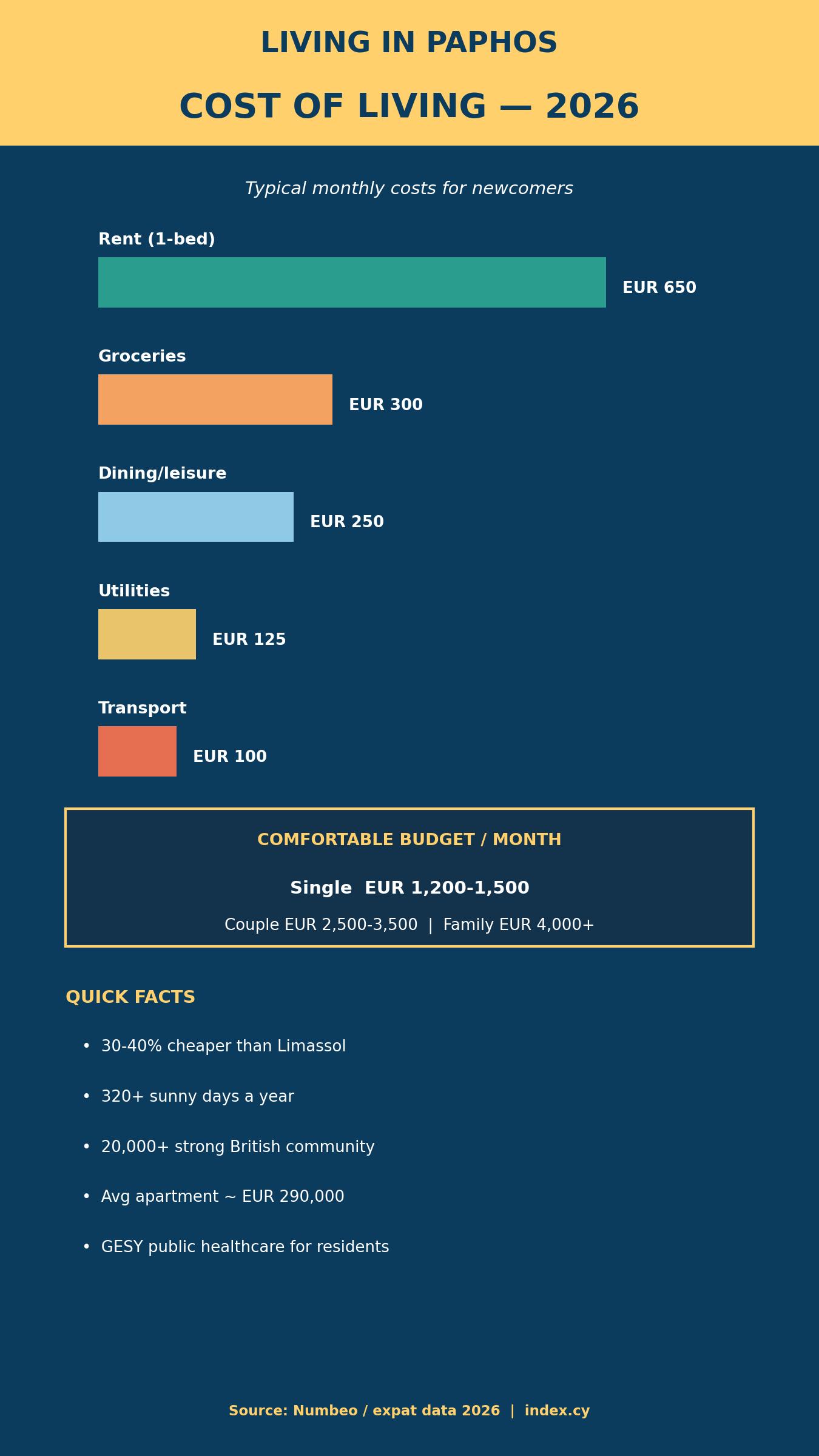
Cost is the headline reason people choose Paphos over Limassol. Choosing Paphos typically lowers monthly outgoings by 30-40%, and almost all of that saving comes from cheaper housing. The trade-off is a smaller job market, so Paphos works best for retirees, remote workers, and anyone with income from outside the island.
Here is a realistic monthly budget for 2026, based on current expat data:
| Household | Comfortable monthly budget | Main drivers |
|---|---|---|
| Single person | €1,200-€1,500 | Rent €400-€800, groceries €250-€350, dining €150-€200 |
| Couple | €2,500-€3,500 | Includes a car, eating out, and leisure |
| Family of four | €4,000+ | Rent, schooling extras, larger grocery bill |
A few line items are worth flagging. Utilities for a modern apartment average €100-€150 a month across the year, but a large villa with air conditioning running through summer can reach €250-€400. Internet runs €30-€50. Dining is a genuine bargain: a traditional taverna lunch costs €8-€14, and a mid-range restaurant meal sits around €12-€20 per person.
For a deeper district-by-district breakdown of grocery, transport, and tax costs, see our full cost of living in Cyprus guide. You can also cross-check daily prices on Numbeo’s Cyprus cost index, which is updated continuously by residents.
Best Areas to Live in Paphos
Paphos is really a cluster of distinct neighbourhoods, each with its own character and price point. Choosing the right one is the single biggest decision when living in Paphos.
Kato Paphos (Lower Paphos)
The tourist and harbour district, home to the UNESCO archaeological park and the seafront promenade. It is lively, walkable, and full of restaurants. Modern one- and two-bedroom apartments here sell between €220,000 and €350,000, at roughly €3,200 per square metre.
Coral Bay and Peyia
Coral Bay is the premium coastal pocket northwest of the city, popular with families and second-home buyers. Standalone villas typically list between €500,000 and €1.2 million, with prices often above €3,800 per square metre. Neighbouring Peyia offers hillside sea views at more accessible prices.
Tala and the Villages
Tala, a hillside village above the city, is a long-standing favourite with British retirees for its cooler air and community feel. Inland villages such as Geroskipou and the Tombs of the Kings area trade closer to €2,800 per square metre and suit buyers who want space and value over a beachfront postcode.
Chloraka and Kissonerga
These coastal suburbs north of the centre attract expat families who want newer housing and quick access to both the sea and international schools. To see what is currently available across all of these areas, browse properties for sale in Paphos or current rentals in Paphos.
Healthcare, Schools, and Daily Life in Paphos
Healthcare is one of the strongest arguments for living in Paphos. The island’s public General Healthcare System, GESY, launched in 2019 and now covers more than 95% of residents. As a tax resident you contribute around 2.65% of gross income and gain access to GPs, specialists, and public hospitals. Many residents pair GESY with affordable private clinics for faster appointments.
Paphos General Hospital handles routine and emergency care, though the most complex procedures sometimes mean a trip to Limassol or Nicosia. Day-to-day medical care, dentistry, and pharmacies are well covered locally, and most practitioners in expat areas speak English. You can review how the public system works on the official GESY website.
For families, Paphos has several private and international schools teaching the British and other curricula, which is a major draw for working-age movers. Fees are lower than comparable schools in the UK, and class sizes tend to be small. Daily life is easy: supermarkets, banks, and services are clustered around the city, and a car is close to essential outside the central tourist strip.
Banking and admin have improved for newcomers, too. Opening a local account, registering with GESY, and securing residency are all routine processes that English-speaking lawyers and accountants handle for modest fees. If you are relocating from Britain specifically, our guide to moving to Cyprus from the UK walks through paperwork, shipping, and residency step by step.
The Climate and Lifestyle in Paphos
Paphos enjoys one of the sunniest climates in Europe, with more than 320 clear days a year. Winters are mild at 15-20°C, which means outdoor cafés and coastal walks stay pleasant from November through March. Spring is the greenest, warmest stretch and the best time to explore the Akamas peninsula and Troodos foothills.
Summers are the trade-off. July and August are long and hot, regularly topping 35-38°C, and air conditioning becomes a real cost. Most residents adapt by living early-morning and evening lives in high summer, with beach time built around the heat.
The lifestyle is unhurried and outdoors-first: harbour dining, hiking, golf, and swimming dominate the calendar. The slower pace is precisely why many people rate Paphos as the most liveable city in Cyprus year-round. Retirees in particular find the combination of climate, community, and low crime hard to beat. Our retire to Cyprus guide covers pensions, residency, and tax for those moving in retirement.
This short video captures the everyday rhythm of life in Paphos and nearby Peyia:
Getting Around, Working, and Connectivity
Practical logistics shape daily life in Paphos as much as costs do. Paphos International Airport sits just southeast of the city and runs direct flights to the UK and much of Europe, which is a decisive factor for residents who travel home regularly. The trade-off is location: Paphos is the most westerly of Cyprus’s cities, so a trip to Nicosia takes around 90 minutes and Limassol roughly 45 minutes by car.
Public transport exists but is limited to local and intercity buses, so most residents own a car. Driving is on the left, which suits British movers, and fuel and insurance are reasonable by European standards. Roads within the district are good, and parking near the centre is straightforward outside peak tourist months.
On the work front, be realistic. The Paphos job market is concentrated in tourism, hospitality, real estate, and services, with fewer corporate roles than Limassol or Nicosia. The city works best for retirees, remote workers, and entrepreneurs who bring their own income. Fibre internet is widely available, with packages at €30-€50 a month, making Paphos a credible base for remote professionals and digital nomads.
Property Prices: Renting vs Buying in Paphos
Once you have decided living in Paphos is right for you, the next question is whether to rent or buy. Renting first is sensible: it lets you test neighbourhoods before committing, and Paphos rents are well below Limassol’s.
| Property | Monthly rent (2026) | Typical purchase price |
|---|---|---|
| 1-bedroom apartment | €500-€800 | €220,000-€290,000 |
| 2-bedroom apartment | €700-€1,200 | €290,000-€360,000 |
| 3-bedroom house | €1,000-€1,600 | €340,000-€520,000 |
| Villa | €1,800+ | €500,000-€1.25M |
The average apartment in Paphos costs around €290,000 in 2026, with the wider market averaging close to €3,950 per square metre. Prices are forecast to rise 3-5% a year, supported by strong foreign demand and a limited supply of new coastal stock. You can check live data on average two-bedroom apartment prices in Paphos and verify wider market trends through the Cyprus Mail property coverage.
Buyers ready to move forward should read our Paphos property buyer’s guide for the full purchase process, and consider running an instant property report before making an offer. New-build hunters can browse complexes and projects in Paphos.
Pros and Cons of Living in Paphos
No location is perfect. Here is an honest summary to weigh against your own priorities.
The advantages:
- Lower cost of living than Limassol, driven mainly by cheaper housing
- One of Cyprus’s largest and most settled English-speaking communities
- Excellent climate with 320+ sunny days and mild winters
- Strong public healthcare through GESY plus affordable private care
- Relaxed, outdoor, low-crime lifestyle that suits retirees and remote workers
The drawbacks:
- A limited job market concentrated in tourism and services
- Relative isolation on the western coast, far from Nicosia and Limassol
- Very hot summers that push up electricity bills
- Reliance on a car for most journeys outside the centre
- High summer tourist volumes in coastal districts
Frequently Asked Questions
Is Paphos cheaper than Limassol?
Yes. Most residents find living in Paphos costs 30-40% less than Limassol, with the saving driven almost entirely by lower rents and property prices.
How much do you need to live comfortably in Paphos?
A single person needs roughly €1,200-€1,500 a month, a couple €2,500-€3,500, and a family of four around €4,000 or more, depending on housing and lifestyle.
Is Paphos good for British expats?
Very. Paphos has one of the largest British communities in Cyprus, English is widely spoken, and the airport offers direct UK flights, making it a popular relocation and retirement base.
Do I need a car in Paphos?
For most people, yes. Public transport is limited, so a car is close to essential for getting around the district, especially if you live outside central Kato Paphos.
Final Thoughts on Living in Paphos
Living in Paphos delivers a rare combination: a sunny, relaxed coastal lifestyle, a large and welcoming international community, and costs that sit well below Limassol. It is best suited to retirees, remote workers, and families with income from outside the island, given the local job market is modest. The hot summers and reliance on a car are real considerations, but for many they are a small price for 320 days of sunshine and a genuinely affordable Mediterranean life.
If Paphos is on your shortlist, start by exploring properties for sale in Paphos and current rentals across the district, then use index.cy’s data tools to compare value before you commit. The clearer your picture of costs and neighbourhoods, the more confident your move will be.
More about Paphos
Kissonerga's median house price is €1,000,000 — and it describes almost nobody. We priced all 303 live listings to show what buying…
Geroskipou has more apartments for sale than any village on the Paphos coast. We priced 1,169 listings: medians, the bedroom ladder and…
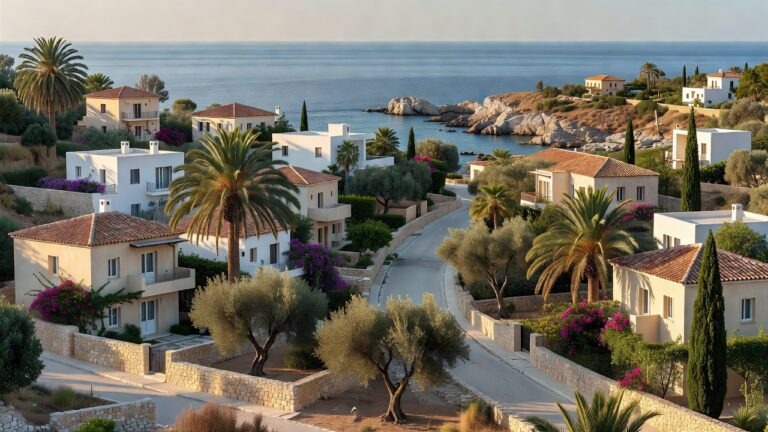
Chlorakas property prices from 704 live Paphos listings: median flat EUR 365,000, house EUR 850,000. Full area guide, 2026 market data and…
Keep reading
Larnaca Property Market Surges: Which Areas Are Leading the Price Rise? Larnaca’s property market has experienced a notable surge in prices recently,…
We analysed 66 Tseri, Nicosia listings: 18 apartments, 8 houses and 34 plots. Median 2-bed price is EUR174,000. See prices and what…
We analysed 246 Lakatamia, Nicosia listings: 129 apartments, 52 houses and 46 plots. Median 2-bed price is EUR195,000. See prices and what…