What this guide covers
- Building a House in Cyprus vs Buying: Which Makes Sense?
- How Much Does It Cost to Build a House in Cyprus?
- How to Finance Building a House in Cyprus
- Finding and Buying the Right Plot
- What Permits Do You Need to Build a House in Cyprus?
- The Construction Timeline: From Plot to Keys
- VAT, Taxes and Other Costs When Building
- Choosing Architects, Engineers and Builders
- Final Thoughts on Building a House in Cyprus
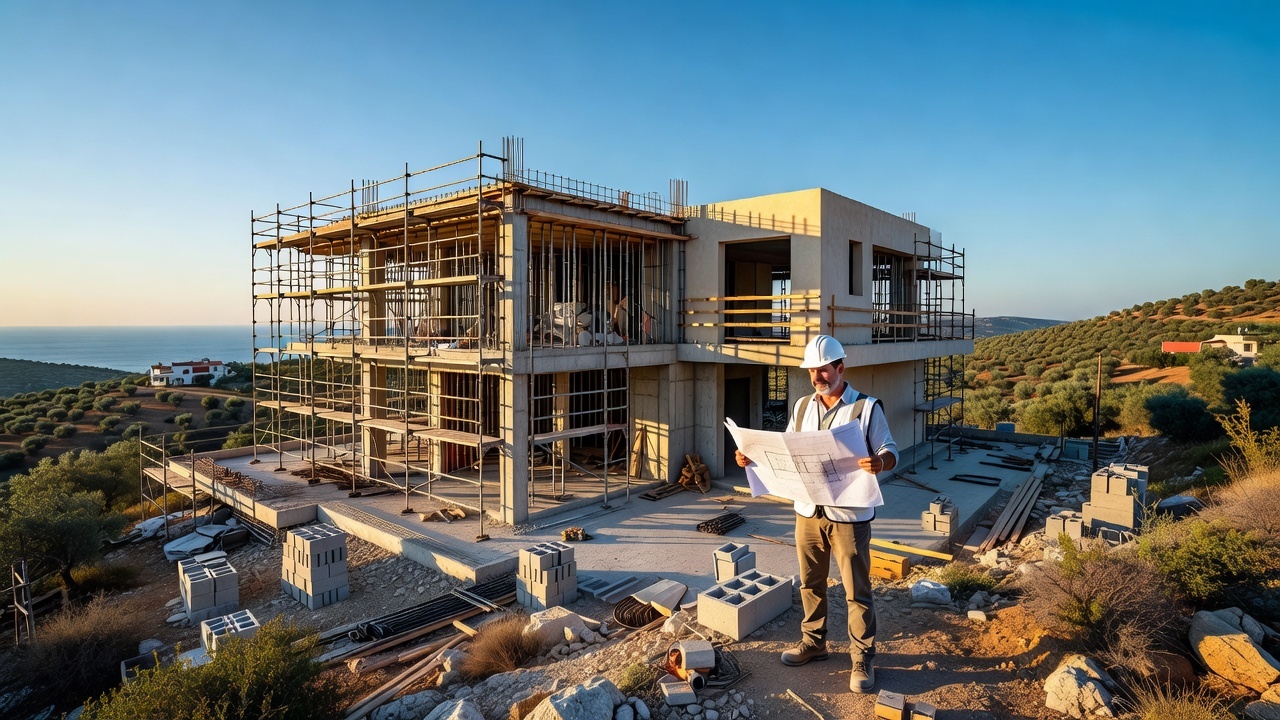
Building a house in Cyprus gives you something the resale market rarely offers: a home built exactly to your specification, on a plot you chose, at a cost you can plan for. It also comes with more moving parts than simply buying a finished property. You need the right plot, two separate permits, a registered architect, and a clear grasp of construction costs and VAT.
This guide walks through everything involved in building a house in Cyprus in 2026, from realistic per-square-metre costs to the electronic permit process and the taxes you will pay. Whether you are an expat planning a retirement villa in Paphos or an investor developing a plot in Limassol, the numbers and steps below will help you decide with confidence.
Building a House in Cyprus vs Buying: Which Makes Sense?
The first decision is whether to build at all. Buying a finished home is faster and involves fewer unknowns. Building takes 12 to 24 months from plot purchase to move-in, but it lets you control layout, quality, energy efficiency, and total spend.
Building tends to make sense when you want a specific design, a particular location where little is for sale, or a higher standard of finish than the resale stock offers. It also appeals to buyers who want a new-build energy rating and the lower running costs that come with modern insulation and solar.
Buying makes more sense when you need to move quickly, want a title deed already in hand, or prefer to avoid managing a construction project. If you are still weighing options, compare current listings for houses for sale in Cyprus and villas across the island against the build costs below. For many buyers, the deciding factor is simple: a custom build on a good plot can deliver more home per euro, provided you have the time and patience to see it through.
How Much Does It Cost to Build a House in Cyprus?
Construction cost is the number most people want first. In 2025, building costs in Cyprus ranged from roughly €1,200 to €1,800 per square metre for the build itself, with full turnkey projects that include exterior works, landscaping, and utility connections reaching €1,700 to €2,500 per square metre. Industry forecasts expect costs to rise a further 5 to 8 percent through 2026 as material and labour prices climb.
Here is how the per-square-metre cost breaks down by finish quality:
| Build quality | Cost per m² (2026 est.) | What it includes |
|---|---|---|
| Basic | €1,250–€1,450 | Standard materials, simple finishes, essential fittings |
| Mid-range | €1,500–€1,750 | Modern materials, quality kitchen and bathrooms, better insulation |
| Luxury | €1,900+ | Premium materials, smart-home systems, high-spec finishes and pools |
For a typical 180 m² family home at mid-range quality, expect a build cost of roughly €270,000 to €315,000, before land. Add professional fees on top: architects, structural engineers, and consultants typically charge 7 to 10 percent of the total project cost.
Costs also vary by district. Limassol commands the highest labour and contractor rates, while Larnaca, Nicosia, and Famagusta tend to run lower. To sanity-check your budget against finished-home values, review the average price per square metre for houses in Cyprus before you commit to a build.
Remember that the headline per-square-metre figure rarely tells the whole story. Site preparation on a sloped plot, retaining walls, a swimming pool, and premium glazing can each add tens of thousands of euros. Build a contingency of 10 to 15 percent into every budget.
How to Finance Building a House in Cyprus
Financing a build works differently from financing a purchase. Instead of one lump-sum mortgage against a finished property, most lenders offer a construction or self-build mortgage that releases funds in stages as work is completed and verified. You draw down money to match each construction milestone, and interest usually applies only to the amount released so far.
Cypriot banks typically lend up to 60 to 70 percent of the combined value of the plot and the projected build cost, though terms are stricter for non-residents. You will need the approved permits, a detailed build contract, cost breakdowns from your contractor, and proof of income before a bank commits. Many buyers fund the plot purchase in cash and borrow only against the construction phase, which simplifies approval.
Rates, deposit requirements, and eligibility have shifted with the wider interest-rate environment, so compare offers carefully. Our Cyprus mortgage guide covers current rates, the documents lenders require, and how foreign buyers can improve their chances of approval. Whatever you borrow, keep your contingency fund separate from the loan so an unexpected cost never stalls the build.
Finding and Buying the Right Plot
You cannot build without land, and not all land is equal. The plot’s zoning determines what you can build, how tall, and how much of the plot you can cover. Two ratios matter most: the building coefficient (how much floor area you can build relative to plot size) and the coverage ratio (how much of the plot the building footprint can occupy).
Before buying any plot, confirm three things: that it sits in a residential building zone, that it has a clean title deed, and that it has access to roads and utilities. A plot without a registered title deed or with a shared access issue can stall your project for years. Our guide to title deeds in Cyprus explains what to verify and why it matters.
Start your search with current plots of land for sale across the island, and read our full land for sale in Cyprus guide for a deeper look at zoning categories, planning zones, and what makes a plot buildable. A qualified surveyor or lawyer should review the plot’s planning status before you sign anything.
Location shapes both cost and long-term value. A plot near the coast or a growing town centre costs more upfront but holds value better, while inland and village plots offer space and lower prices at the expense of amenities. Consider the practical realities too: how far is the plot from schools, healthcare, and shops, and does it face the right direction for natural light and views? These details are hard to change once the foundation is poured, so weigh them carefully before you buy.
What Permits Do You Need to Build a House in Cyprus?
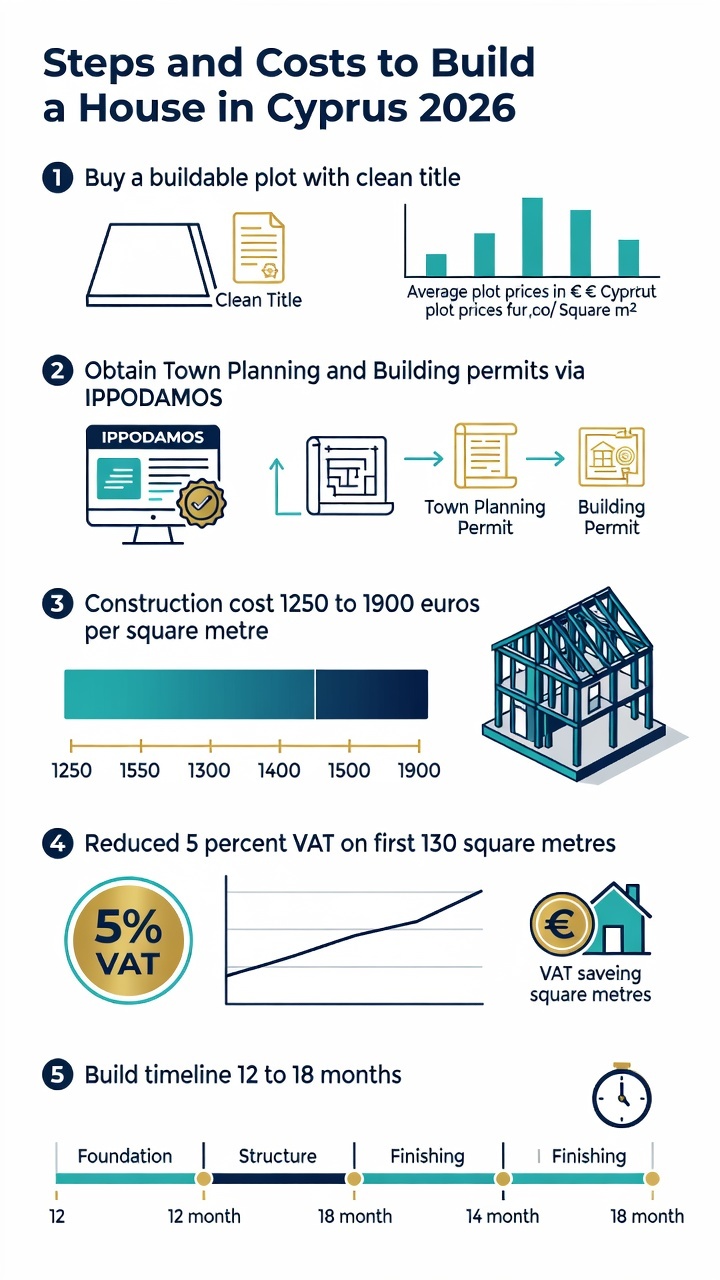
Building a house in Cyprus requires two separate permits, and both are now handled electronically. Since 1 July 2024, all applications must be filed through the IPPODAMOS (Hippodamus) online portal, which replaced the old paper process entirely.
The two permits are:
- Town Planning Permit — confirms your project complies with zoning, setbacks, height limits, and design rules for the area.
- Building Permit — approves the technical construction details, including structure, fire safety, energy performance, and engineering.
Both applications must be submitted by an architect or civil engineer registered to practise in the Republic of Cyprus. You cannot file them yourself. The submission includes architectural drawings, structural calculations, and the plot’s title deed.
On timing, the Town Planning Permit typically takes 1.5 to 3 months, and the Building Permit a further 2 to 4 months. Cyprus also runs a fast-track process for small residential projects, covering one to four single-family houses on a legally registered plot that fully complies with zoning, density, height, and setback rules. Once granted, a planning permission remains valid for three years; if substantial work has not begun in that window, you must reapply. You can review the official framework on the Cyprus government planning permission portal.
The Construction Timeline: From Plot to Keys
Once permits are in hand, construction follows a predictable sequence. Knowing the stages helps you plan payments and spot delays early.
- Site preparation and foundations (4–8 weeks): clearing, excavation, and pouring the concrete foundation.
- Structural frame (6–12 weeks): concrete columns, beams, and floor slabs that form the skeleton.
- Walls, roof, and weatherproofing (8–12 weeks): block work, roofing, and sealing the building envelope.
- Mechanical and electrical (6–10 weeks): plumbing, wiring, air-conditioning, and solar preparation.
- Finishes (8–16 weeks): plastering, flooring, kitchens, bathrooms, painting, and fittings.
- Final inspections and connection (2–6 weeks): utility connections and the certificate of final approval.
In total, a standard house takes roughly 12 to 18 months to build once permits are approved, and closer to 24 months when you count plot purchase and the permit process. Weather rarely stops work in Cyprus, but material shortages and contractor availability can. Independent inspections at key stages protect your investment; our property inspection service can verify build quality before you release each payment.
For a broader look at the Cyprus market and why demand for new homes keeps growing, this overview is a useful watch:
VAT, Taxes and Other Costs When Building
Tax is where building diverges most from buying resale. The headline benefit is VAT: new-build primary residences qualify for a reduced 5 percent VAT rate on the first 130 m² of covered area, rather than the standard 19 percent.
To qualify for the reduced rate in 2026, the residence must be valued at up to €350,000, the total transaction value must not exceed €475,000, and total covered area must stay under 190 m². The 19 percent standard rate applies to any area between 130 and 190 m². You must use the property as your permanent residence for at least ten years; sell or rent it sooner and you repay the VAT difference. Applications under the older, more generous rules must be filed before 15 June 2026.
Beyond VAT, budget for these costs when building a house in Cyprus:
- Professional fees: 7–10% of project cost for architect, engineers, and consultants.
- Permit and application fees: paid through the IPPODAMOS portal.
- Utility connections: electricity, water, and sewerage or septic.
- Legal fees: for plot purchase, contracts, and title transfer.
One advantage of building: when a new property is sold with VAT applied, it is generally exempt from property transfer fees, which apply to resale purchases. For the full picture on rates and thresholds, read our guide to VAT on property in Cyprus and consult the PwC Cyprus tax summary for current figures.
Choosing Architects, Engineers and Builders
Your team makes or breaks the project. In Cyprus, only a registered architect or civil engineer can file your permits, so your first hire sets the tone for everything that follows. Look for professionals with a portfolio of completed homes in your district and references you can actually call.
For construction, you can either appoint a main contractor who manages all trades, or hire a developer who delivers a turnkey home. Established developers bring process and warranties but less design flexibility; independent contractors offer more control but require closer oversight. Our guide to property developers in Cyprus explains how to vet firms and what a solid contract should contain.
Whichever route you choose, insist on a written contract with fixed milestones, a clear payment schedule tied to completed stages, penalties for delay, and a defined snagging and warranty period. Never pay large sums in advance of work completed, and use independent inspections to confirm each stage before releasing funds.
Final Thoughts on Building a House in Cyprus
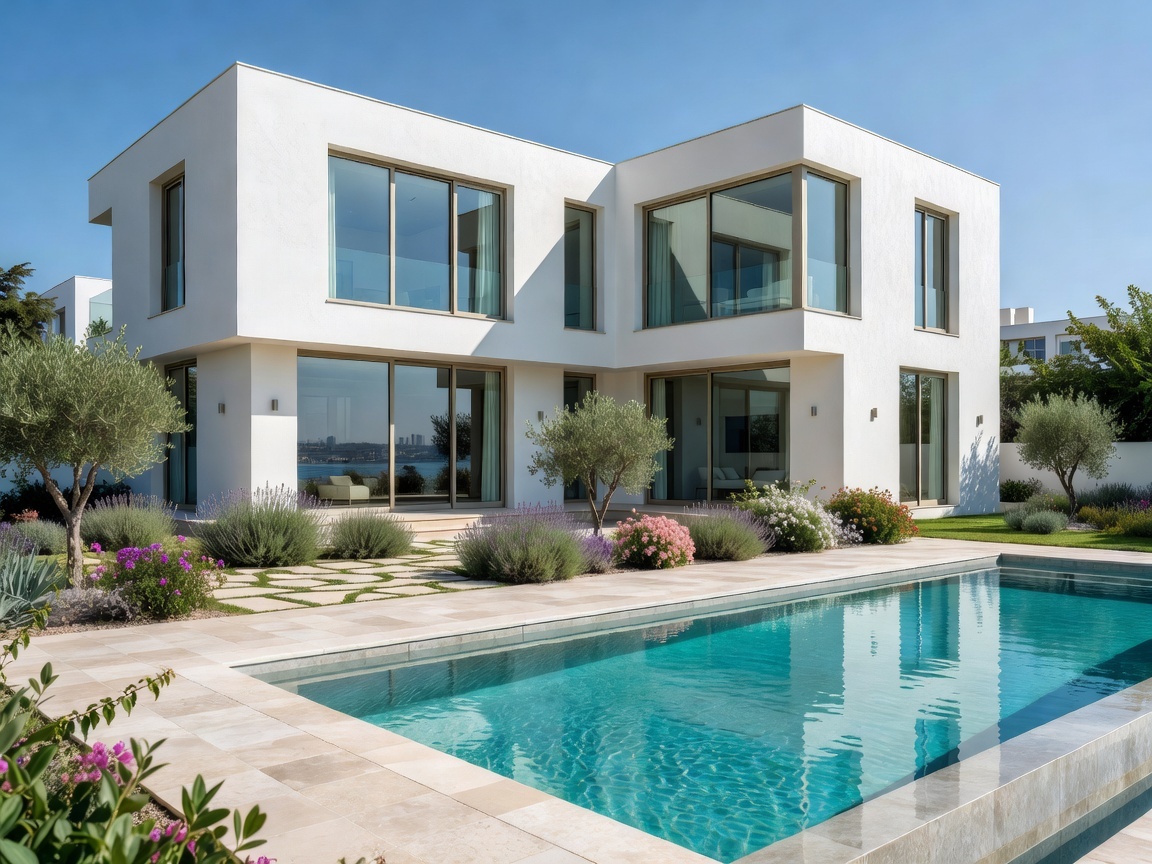
Building a house in Cyprus is a bigger commitment than buying, but it rewards patient buyers with a home built to their exact standard, often at better value per square metre than the resale market. The essentials are straightforward: secure a buildable plot with a clean title, budget €1,250 to €1,900-plus per square metre plus fees and contingency, work only with registered professionals, and use the 5 percent VAT scheme where you qualify.
Do the groundwork before you break ground. Verify zoning and title, get realistic quotes from multiple contractors, and build in a contingency for the surprises every project brings. Speak to a local lawyer and a registered architect early, and treat every verbal promise as something to confirm in writing before money changes hands.
Building a house in Cyprus is not the fastest path to a new home, but for buyers who value control, quality, and long-term value, it is one of the most rewarding. When you are ready to start, browse available plots of land for sale on index.cy and use our data and tools to build with confidence on Cyprus’ #1 property marketplace.
Keep reading
Larnaca Property Market Surges: Which Areas Are Leading the Price Rise? Larnaca’s property market has experienced a notable surge in prices recently,…
We analysed 66 Tseri, Nicosia listings: 18 apartments, 8 houses and 34 plots. Median 2-bed price is EUR174,000. See prices and what…
We analysed 246 Lakatamia, Nicosia listings: 129 apartments, 52 houses and 46 plots. Median 2-bed price is EUR195,000. See prices and what…